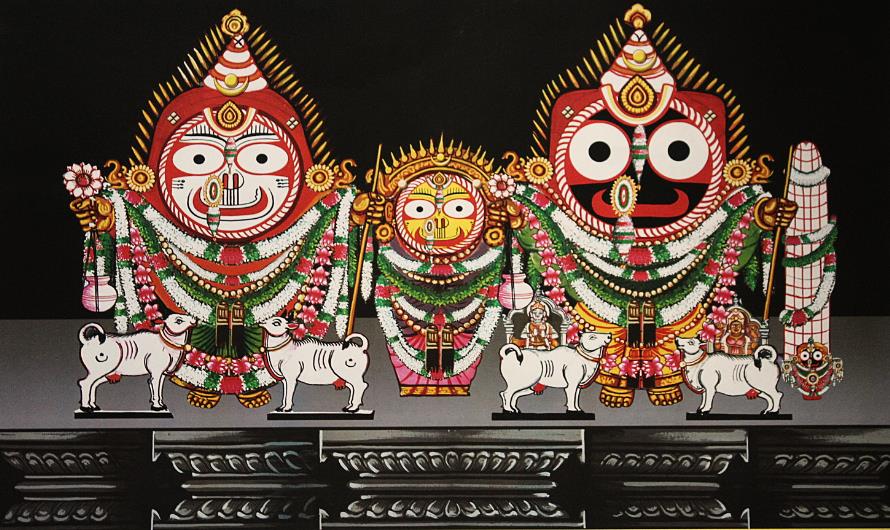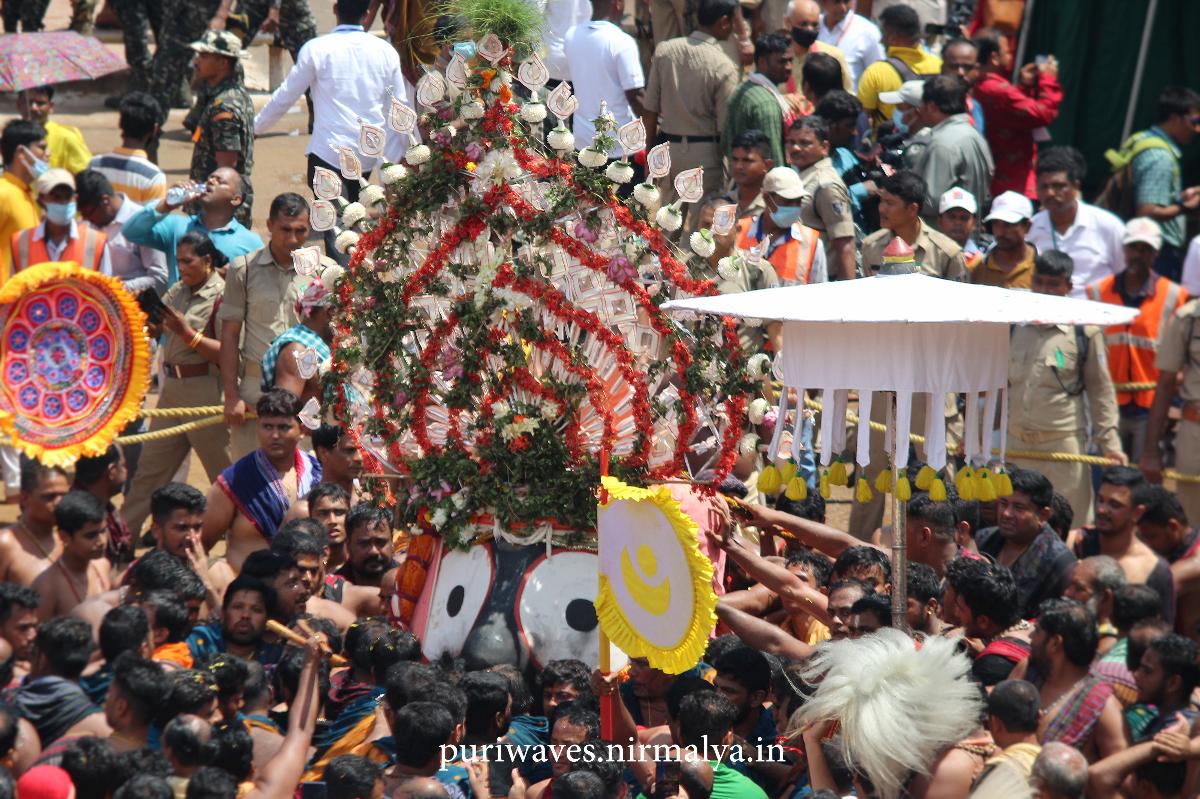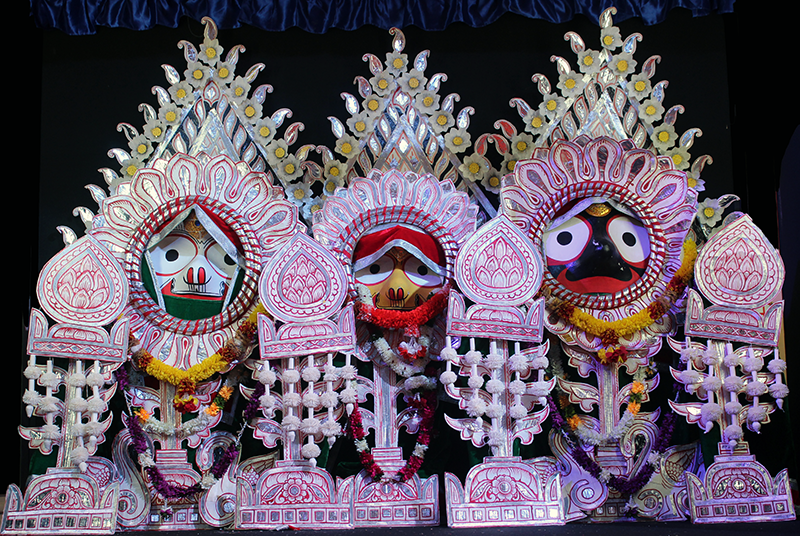
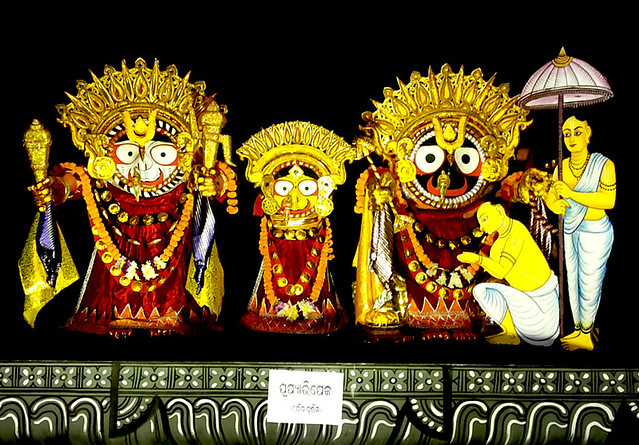
The Coronation Festival of Lord Sri Jagannath, popularly known as Pausha Abhisheka ( Pusya Abhisheka ), is celebrated on the full moon day (Purnima) of the Odia lunar month Pausha in the Jagannath Temple, Puri. This sacred festival is marked by elaborate rituals, royal worship, and the magnificent Golden Besha, witnessed by lakhs of devotees.
Rituals of the Festival Day
Early in the morning, the Kotha Suansia servitor prepares a ceremonial structure in front of the Pratihari Nijoga. The temple Brahmins perform Homa (fire oblations). After the completion of the morning Bhoga, the deities’ attire is changed in a ritual known as Mailama.
This is followed by the Maha Snana Puja (Great Bath). Subsequently, the Garabadu servitors bring sealed vessels containing water and ghee in four rows. After the offering of Sitala Bhoga, the Mudiratha servitor presents Bhoga to the deities.
The Temple Purohita then worships the deities seated on a wooden pedestal called Pidha. After the puja, the Pushpalaka servitors change the attire of the deities once again. Following this, Ghatuaries, Panda, Pati, and Mudiratha servitors apply sandal paste to the deities.
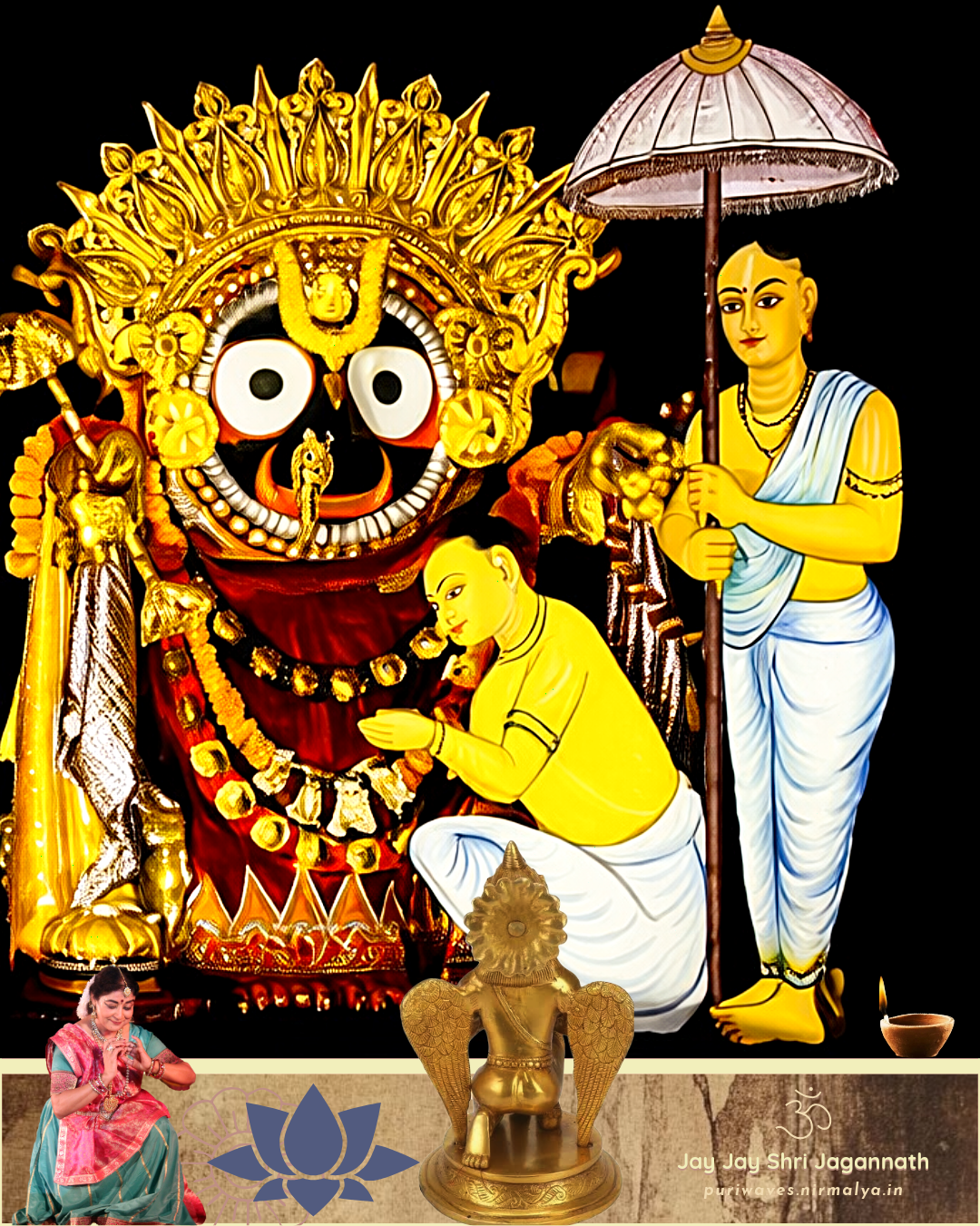
Procession of Goddess Mahalakshmi & Golden Besha
After receiving the divine command (Aangya Mala), Goddess Mahalakshmi proceeds to the main temple, carried on a palanquin through the seven sacred steps (Sata Pahacha). She is seated on the Jagamohan Khata, where the Golden Besha of Lord Jagannath is celebrated with grandeur.
Upon completion of the Golden Besha, Goddess Mahalakshmi returns to her abode. Several rituals during this phase are performed by Vitar Mohapatra, Mudiratha, and Palia Bhandar Mekap servitors.
Rajaniti, Bandapana & Coronation Rites
The Panda servitor performs worship in sixteen steps (Sodasha Upachara). Thereafter, Panda, Pati, and Mudiratha offer Rajaniti Puja, followed by the observance of Bandapana Niti.
A sacred garland from the deities is then sent on a palanquin to the Mahalakshmi Temple for coronation rituals. The garland is placed on a wooden pedestal known as Bhadrasana, and Maha Snana Niti is observed. The deities then return to the southern chamber (Dakhina Ghara).
The Mudiratha servitor completes the Sadhi Bandha rituals at the Anasara Pendal. Subsequently, the Padhiari and Khunita servitors proceed to the Jambeswar (Shiva) Temple. After returning, the ritual of Mangala Arpana is observed.
With these sacred observances, the Coronation Festival of Lord Sri Jagannath, Lord Balabhadra, and Devi Subhadra comes to a holy conclusion.
Rituals Observed on the Previous Day
On the day preceding Pausha Purnima, Jogania Sebaks bring 21 vessels of water and ghee. These vessels are sealed by the Temple Purohita, and the Bada Singhar Bhoga of the deities is offered.
Later, the Kotha Suansia servitor prepares the ceremonial pedestal known as Bhadrasana, where flowers and sandal paste are placed for Adhibasa. Green coconuts are offered to the deities, after which the Lords retire for the night.
The Pausha Abhisheka (Coronation Festival) of Lord Sri Jagannath is a sacred and majestic observance that reflects the deep spiritual heritage, ritual discipline, and royal tradition of the Jagannath Temple. Through a series of meticulously performed rituals involving numerous temple servitors, the festival symbolizes the divine coronation of Lord Jagannath, Lord Balabhadra, and Devi Subhadra. The dazzling Golden Besha, the ceremonial worship, and the participation of Goddess Mahalakshmi highlight the Lord’s supreme sovereignty and cosmic authority. Witnessed by lakhs of devotees, Pausha Abhisheka stands as a profound expression of devotion, continuity of ancient temple customs, and the living cultural legacy of Odisha.