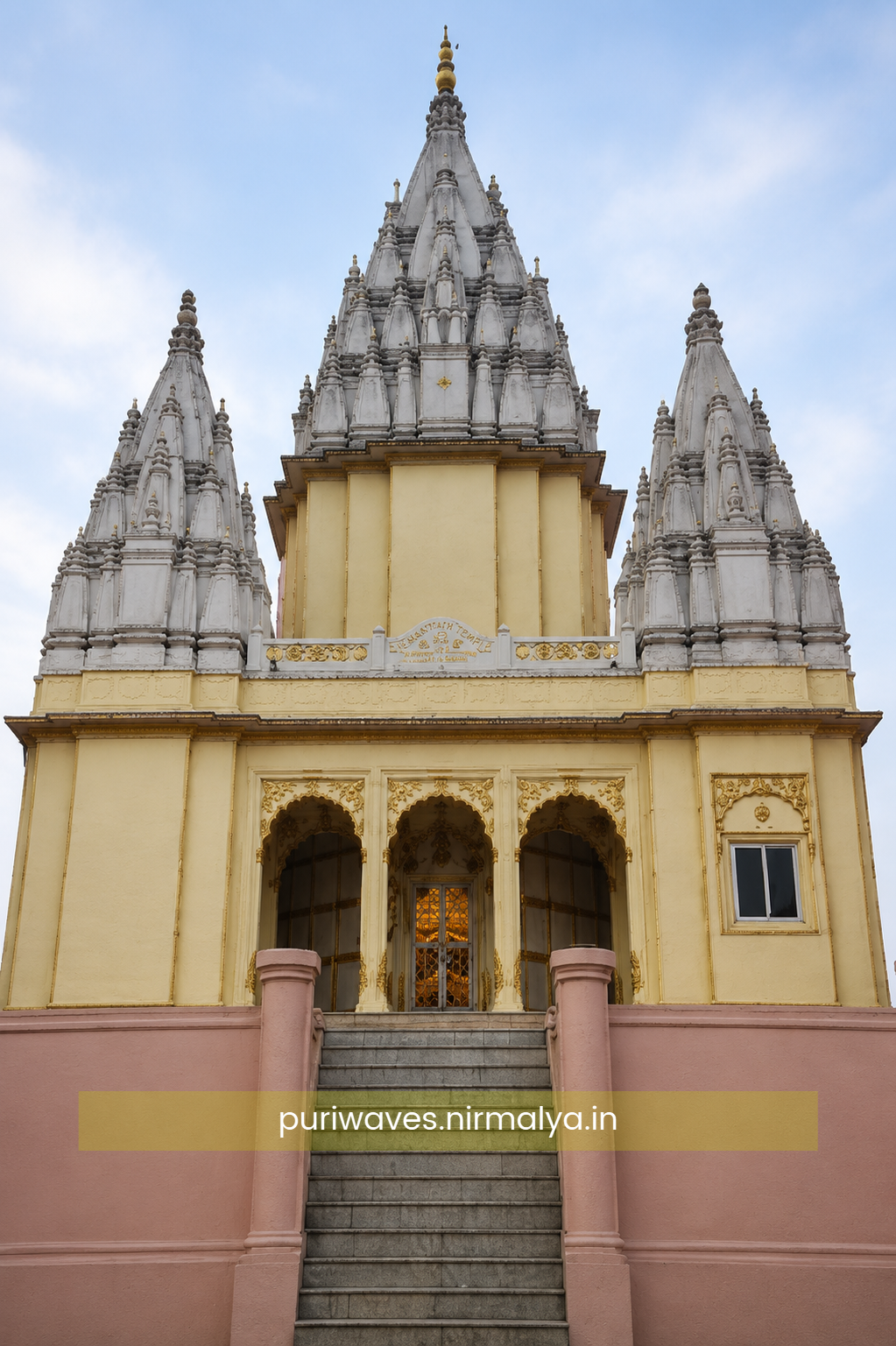
The Varaha Narayana Temple is located within the inner enclosure of Jagannath Temple, at plot no. 91. It stands near the sacred Kalpabata Tree and directly in front of the Sarbamangala Temple. To its south lies the shrine of Lokanath, while on the left side stands the temple of Yameshwar, making this area deeply sacred within the temple complex.
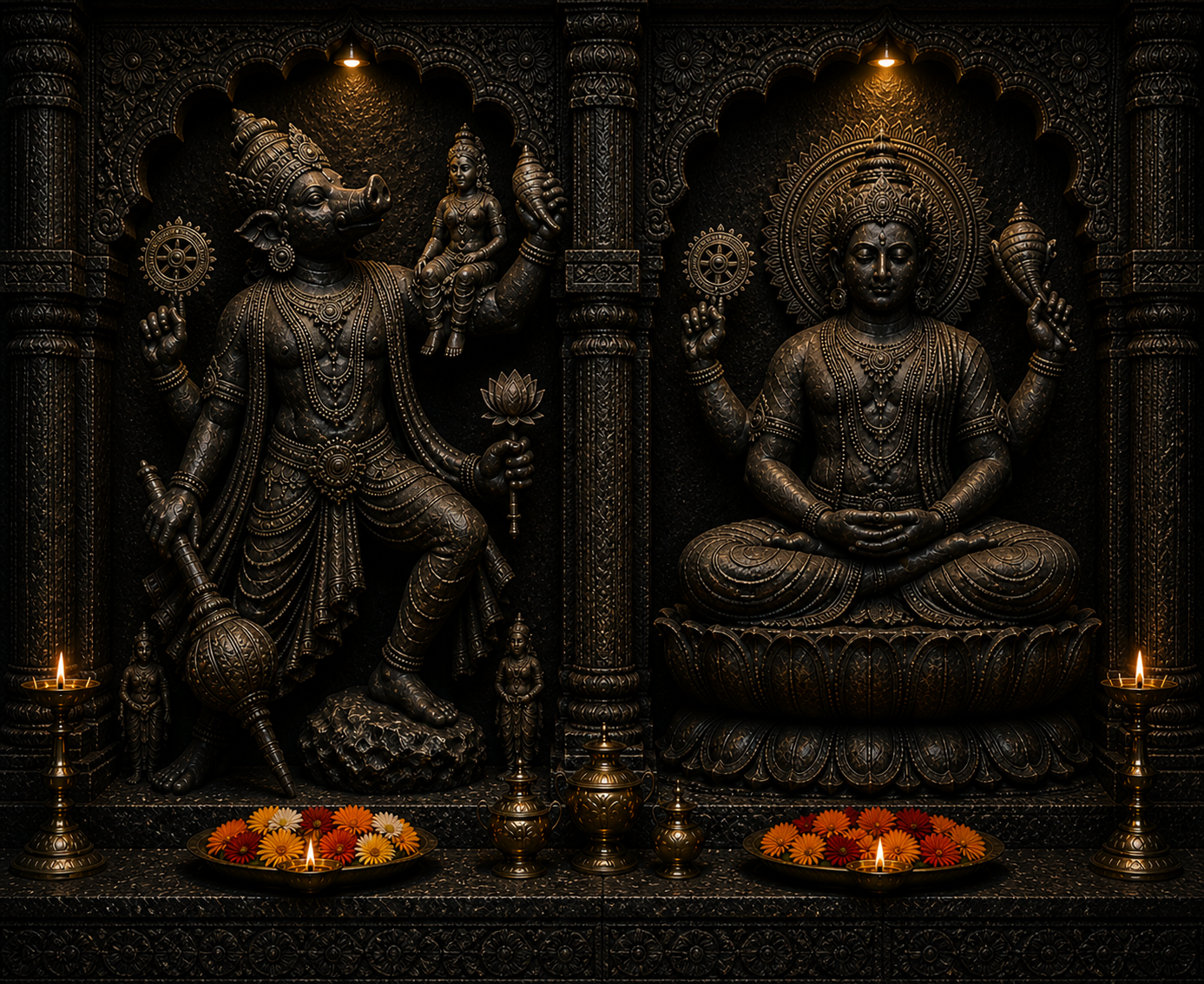
From ancient times, the entrance to this temple has remained very narrow, preserving its mysterious and secluded character. Inside the sanctum, Varaha Narayana is worshipped as the presiding deity. On the southern side of the sanctum is the image of Narayana, while on the left is the image of Varaha. Both idols are made of black stone and are approximately two and a half feet in height. Their artistic style and mode of worship carry a unique and somewhat esoteric tradition.
The Narayana idol is four-armed and depicted in a meditative posture. He sits in a calm, composed position, holding the discus (chakra) in the upper right hand and the conch (shankha) in the upper left hand. The lower hands are placed in a meditative gesture, with one palm resting upon the other. Such a meditative form of Narayana worship is extremely rare in temples across Odisha.
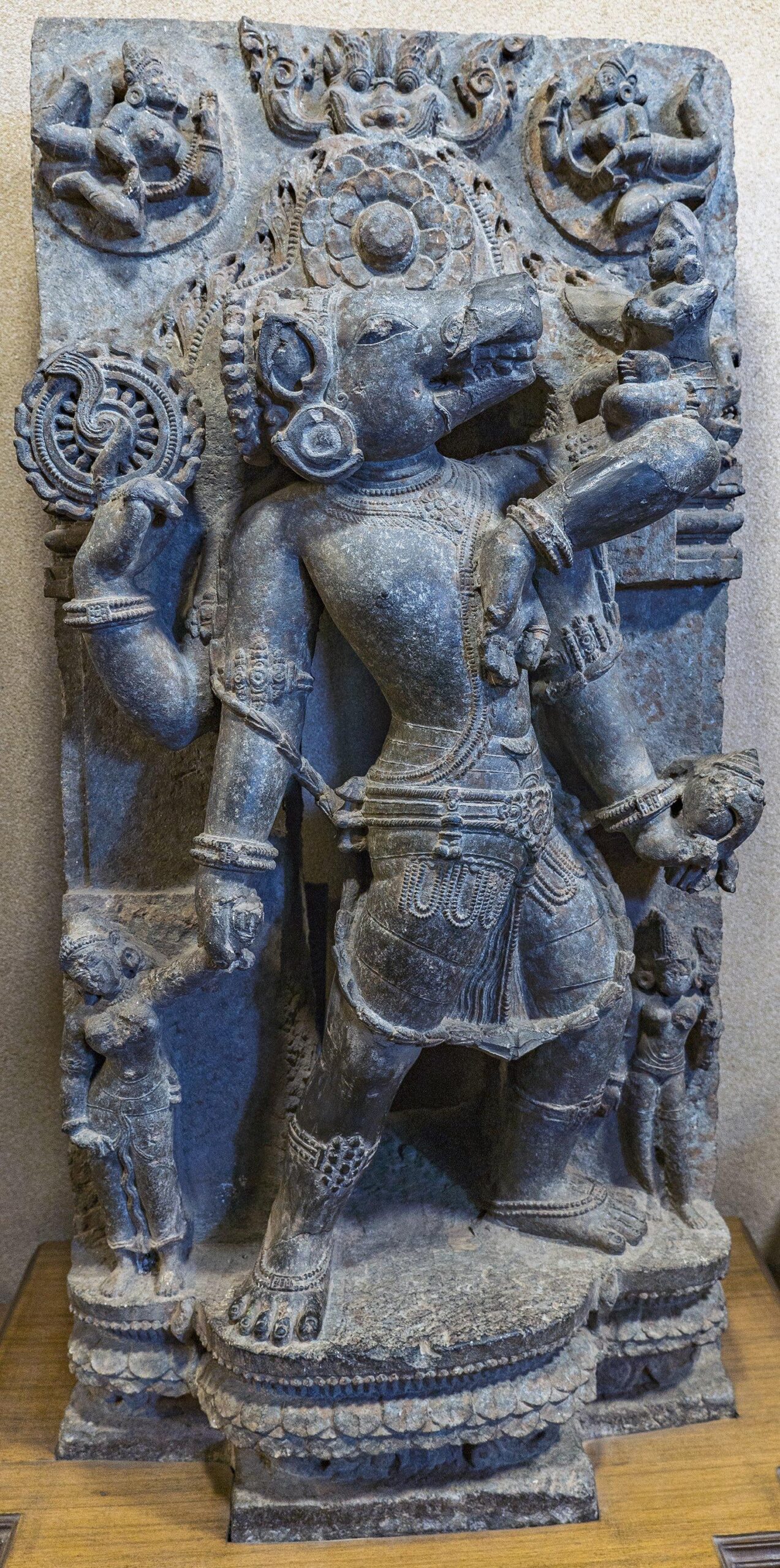
The Varaha idol on the left side is also four-armed and appears in a dynamic posture. The upper right hand holds the discus, while Bhudevi is seated gracefully on the elbow of the upper left arm. In the lower right hand, Varaha is seen holding the hand of Goddess Lakshmi, while the lower left hand is believed to hold a mace (gada). This iconography reflects a distinctive style of Odishan temple sculpture.
A unique aspect of this temple is that worship and public darshan (darshan) are available only during the sacred intercalary month known as Adhika Masa (Mala Masa). During this period, devotees offer betel nut and coconut and take vows. It is a tradition that devotees present thirty different types of flowers and fruits over a period of thirty days. Offerings are made twice daily, and the observance concludes after one full month.
After the Gopala Ballava Bhoga at the main temple, offerings are made to Varaha Narayana. In the evening, after the arati, night offerings and rituals are performed. On the Dwadashi tithi, special offerings of kheer (sweet rice) and Amalu are prepared and presented to the deity.
In earlier times, the temple entrance was sealed with stone, preventing devotees from having darshan even during the sacred month. Because of this, it was once known as the “Amuha Temple” (the unseen shrine). However, after the reinstallation of the chakra atop the temple in 1980–81, public darshan became available during Adhika Masa.
According to scriptures, a devotee who worships Purushottama Narayana with sincerity and devotion attains Goloka Dham. The worship begins from Shukla Paksha Pratipada and concludes on Amavasya, after which devotees must wait until the next Adhika Masa to perform the rituals again.