The Story Behind the Painting, Rock Sculpture, and Toy Statues
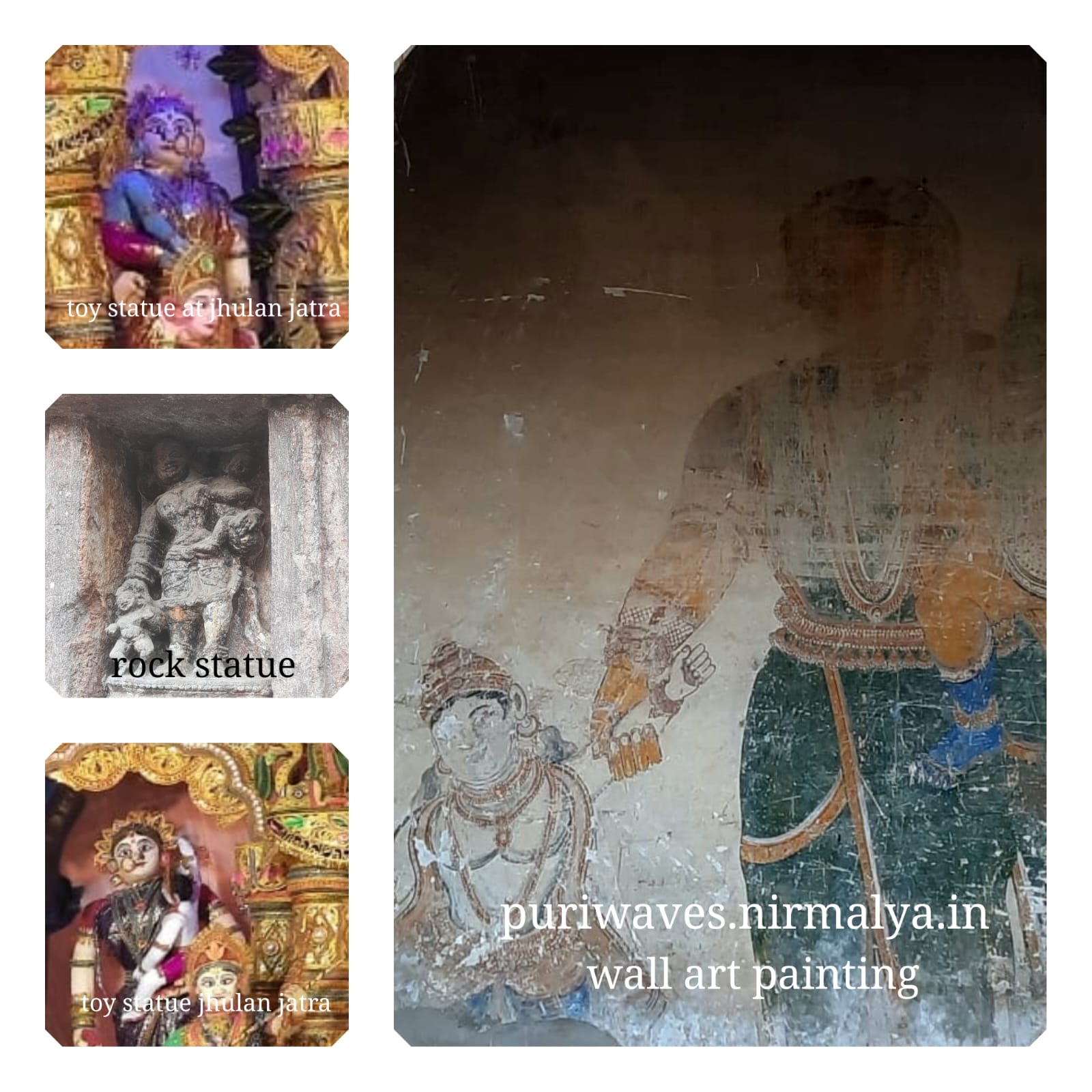
This image is a beautiful collage of Odisha’s ancient artistic expressions, depicting wall paintings, rock sculptures, and toy statues used in Jhulan Jatra. Each piece reflects the rich cultural heritage of Odisha and its deep connection to Krishna’s divine childhood.
The Wall Painting: Yashoda, Krishna, and Balarama
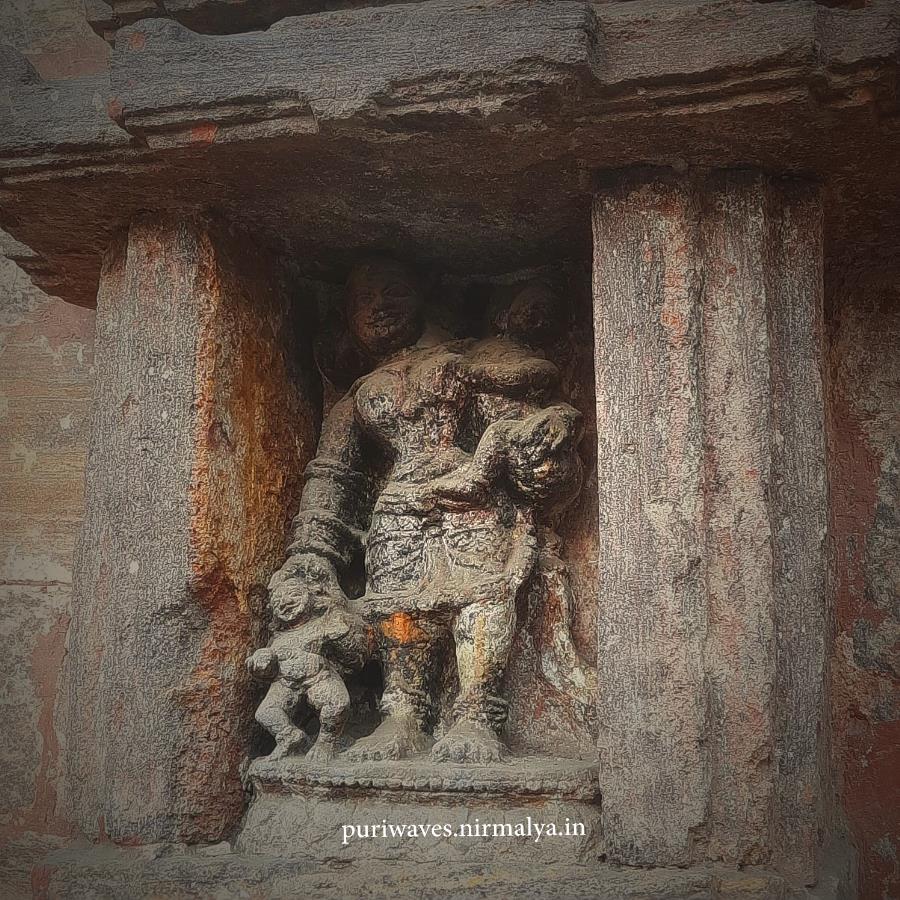
The ancient wall painting captures a heartwarming moment from Krishna’s early life. It depicts Mother Yashoda caring for both Krishna and Balarama in the absence of another mother. Since Balarama’s birth mother, Rohini, is not present in the scene, Yashoda is seen fulfilling a maternal role for both children—holding Krishna on her lap while guiding Balarama with her hand.
This representation is significant because:
- Krishna, born to Devaki, was raised by Yashoda in Gokul to protect him from Kansa.
- Balarama, born to Rohini, also grew up under Yashoda’s care in Gokul, playing alongside Krishna as his elder brother.
The mural, painted in the traditional Odishan style, has a faded yet divine charm, symbolizing the warmth and love of Krishna’s foster mother. It is likely found in an ancient temple, where such paintings narrate mythological stories.
The Rock Sculpture: An Eternal Tale in Stone
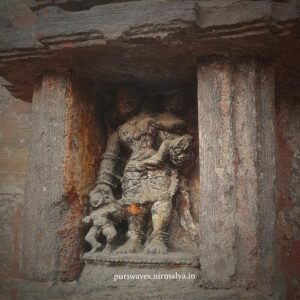
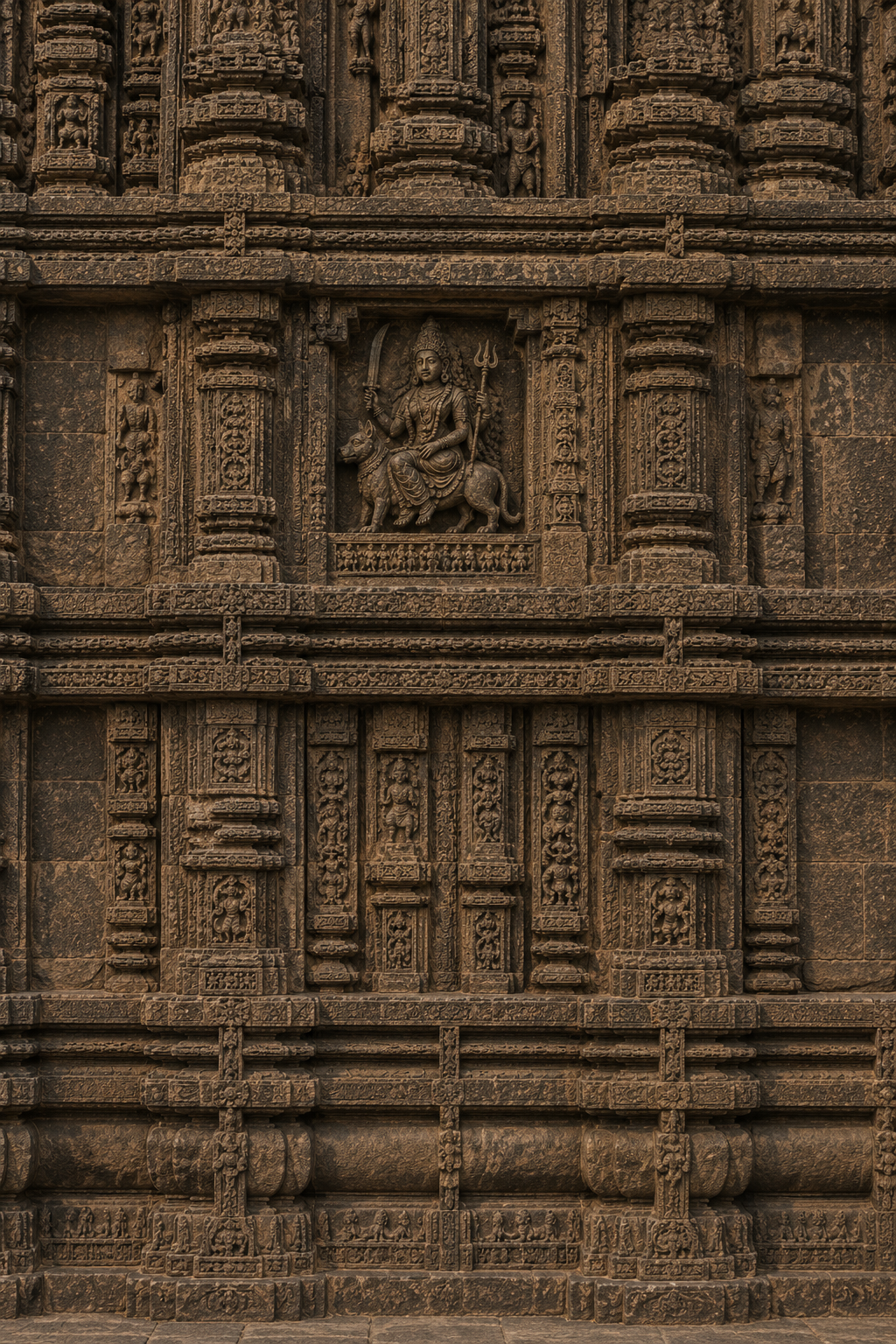
The rock-carved statue in the image is an example of Odisha’s temple architecture, where mythological scenes are sculpted in stone. These rock sculptures are commonly found in temples like Konark, Lingaraj, and Jagannath Temples, where artisans carved intricate depictions of gods, goddesses, and celestial events.
In this sculpture, we see a strong, expressive figure, possibly depicting an episode from Krishna’s life or another divine event. The rugged texture of the rock gives it an ancient feel, showcasing the durability of Odisha’s stone craftsmanship.
The Toy Statues and Jhulan Jatra Festival
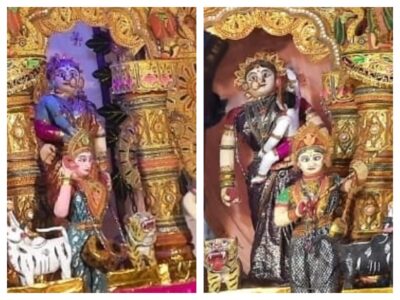
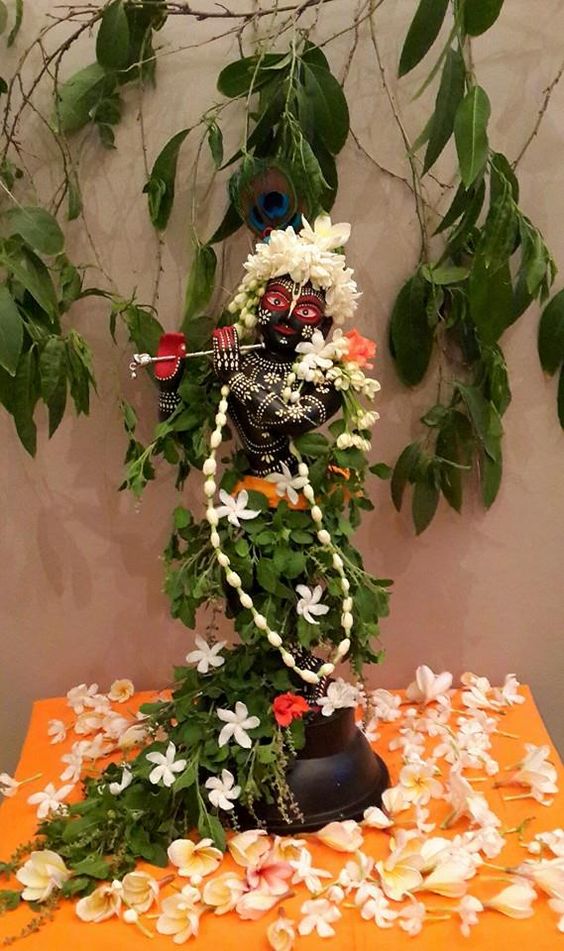
The toy statues of Krishna and Balarama, as seen in the image, are traditionally used in the Jhulan Jatra festival. This festival, celebrated in Odisha, is dedicated to Lord Krishna’s swing festival, where deities are placed on beautifully decorated swings (Jhulan) and worshipped with devotional songs, dances, and rituals.
- The toy idols are small, vibrant representations of Krishna and Balarama, often dressed in colorful clothes and adorned with ornaments.
- During Jhulan Jatra, these idols are placed on swings inside temples and homes, reenacting Krishna’s childhood pastime of playing on swings with Radha and his companions.
- The festival, observed in Puri, Vrindavan, and other parts of India, is a joyful event symbolizing Krishna’s divine playfulness.
Together, these three artistic elements—the wall painting, rock sculpture, and toy statues—represent different facets of Krishna’s divine life and Odisha’s artistic heritage.
- The wall painting captures Krishna’s childhood, emphasizing Yashoda’s maternal love.
- The rock sculpture preserves the devotion of ancient artisans who immortalized Krishna’s legends in stone.
- The toy statues in Jhulan Jatra reflect the living tradition of celebrating Krishna’s playful leelas even today.
This collage beautifully showcases how Odisha’s culture, art, and festivals continue to keep Krishna’s timeless stories alive for generations.