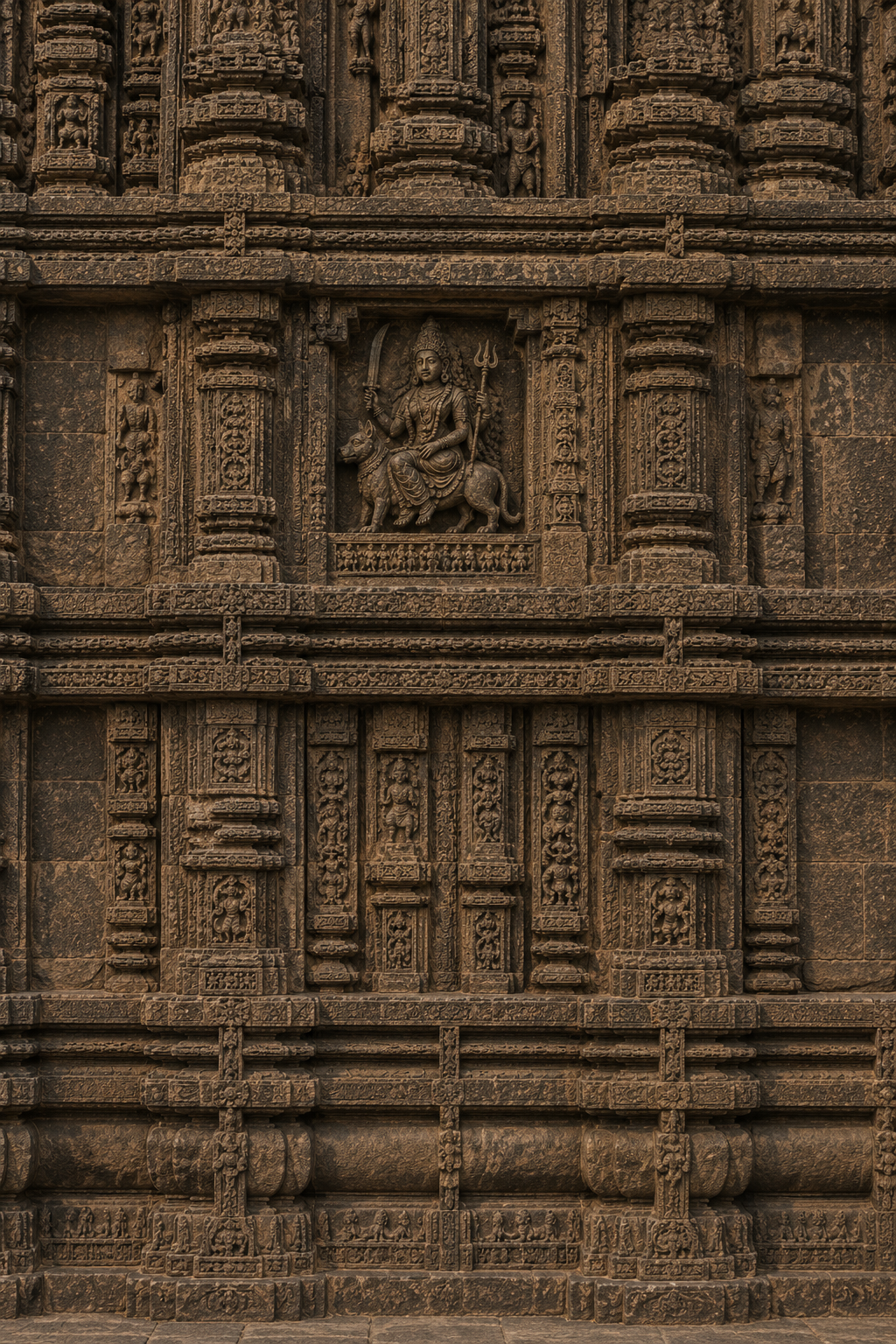
Kutam Chandi, also locally remembered as “Kuram Chandi,” is one of the lesser-known yet spiritually significant Tantric guardian deities associated with Jagannath Temple. The goddess is worshipped in the form of a stone image seated upon a dog, a rare iconographic feature deeply connected with Tantric traditions, Bhairava worship, and the concept of sacred boundary protection.
The image of Kutam Chandi is presently installed inside the temple enclosure near the eastern side of the Mukti Mandapa area. Unlike the principal deities worshipped within the sanctum, Kutam Chandi represents a fierce protective force guarding the sacred precincts of the temple.
In the traditional belief system of Puri, the Jagannath Temple is not only a Vaishnava center but also a powerful Tantric kshetra where several hidden forms of Shakti and Bhairava are believed to reside. Kutam Chandi is considered one such protective goddess connected with the esoteric traditions of the shrine.
According to temple traditions and old Odia accounts, the deity was once installed near the sacred Ratna Simhasana area inside the inner complex, possibly near the Pokharia region adjoining the throne area. However, during periods when Vaishnava influence became dominant within temple practices, many Tantric images and rituals began to face resistance. As a result, the image of Kutam Chandi was removed from its earlier location and later installed near the Kshetrapala shrine within the temple enclosure.
Historical narratives connected with the Maratha administration of Puri also mention controversies surrounding Tantric images near the Ratnavedi. During the Maratha rule, a Bhairava image was reportedly placed near the Ratnavedi. Vaishnava ascetics and bairagis strongly objected to the presence of such Tantric imagery close to the central throne of Lord Jagannath. During repairs of the Ratnavedi in the late eighteenth century, the Bhairava image was temporarily removed. Traditional accounts state that some Vaishnava groups secretly broke the image and threw the fragments into the sea.
This incident angered Tantric practitioners and ascetics associated with the temple traditions. In response, the Maratha ruler Raghuji Bhonsle is said to have ordered the making of another image. Yet, due to continued opposition from Vaishnava groups, the image was not restored near the throne area. Instead, it was finally installed on the wall section of the temple enclosure associated with the shrine intended for Vasudeva.
During the British period, there were attempts to petition the colonial administration to restore the image closer to the Ratnavedi area, but these requests were never implemented.
One of the most interesting beliefs associated with Kutam Chandi is that after the installation of the goddess within the temple enclosure, dogs stopped entering the inner sacred area of the temple. Devotees interpret this as a sign of the goddess’s supernatural guardianship over the shrine.
The iconography of Kutam Chandi is unique in Odisha temple tradition. The goddess is shown seated upon a dog rather than the lion commonly associated with Durga forms. In Tantric symbolism, the dog is linked with Bhairava, cremation-ground symbolism, vigilance, and protection against impure forces. This association makes Kutam Chandi an important example of the hidden Tantric dimensions of the Jagannath tradition.
Even today, the deity receives ritual offerings during the morning dhupa rituals. It is said that offerings from the Bada Badua thali are presented to the goddess, after which temple servitors receive portions of the offering. Though the shrine is small and often unnoticed by ordinary visitors, Kutam Chandi remains an important guardian presence within the sacred geography of Puri.
The image itself is modest in scale and carved in the traditional Kalinga temple style, integrated into the wall architecture rather than standing as a separate freestanding idol. The sculpture reflects the layered spiritual history of Puri, where Vaishnava devotion, Shaiva worship, and Tantric Shakti traditions have coexisted for centuries within the sacred universe of Lord Jagannath.