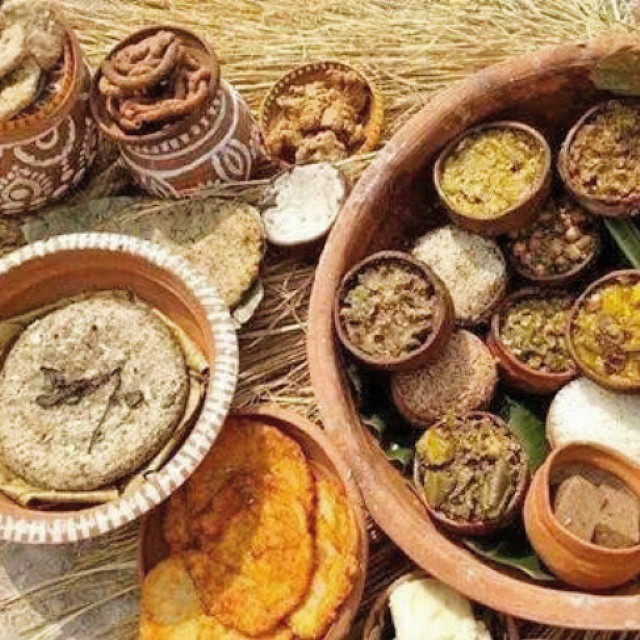

At the sacred Srimandir of Lord Jagannath in Puri, the daily preparation of Mahaprasad has always relied on simple earthen pots – Sacred Pots, Sacred Duty. These pots are not ordinary vessels — they are an ancient seva (sacred service) offered by the Kumbhar community. Every day, new pots are brought from nearby villages, never reused, symbolizing purity and dedication.

This age-old tradition has continued for centuries, linking the temple to the humble hands of the potters. However, in recent times the Kumbhar society faces serious challenges. The special kind of clay required for these pots is becoming increasingly scarce and expensive, making it harder to sustain this vital heritage. What was once an abundant natural gift is now rare, putting pressure on the continuity of this seva.’
Kumbhar Seva: Keeping the Tradition of Mahaprasad Alive – Sacred Pots, Sacred Duty
But this seva is not free — it is a time-consuming and highly skilled task. From finding the right soil, preparing it, shaping the pots, and firing them, the process requires dedication and care. With changing times, the Kumbhar community is facing growing challenges: the special soil is becoming rarer and costlier, and the effort needed to sustain this sacred duty is increasing.
At the Srimandir, all Mahaprasad is cooked only in red earthenware pots, prepared afresh every day by the Kumbhar community of nearby villages. This service (seva) is an ancient tradition, carried out with devotion for centuries. However, it is not free — it is a time-consuming and delicate craft that requires skill, patience, and the right clay. Today, the Kumbhar society faces mounting challenges: the specific soil needed is becoming increasingly rare and costly, making their sacred duty harder to sustain.
Other than earthen pots, no other vessels are allowed in the temple’s kitchen. According to Ayurvedic principles, cooking in clay pots preserves nutrients, enhances taste, and reduces acidity due to their natural alkaline properties. The clay is also believed to carry healing qualities, improving digestion and metabolism, while avoiding harmful chemicals often found in metal or plastic containers.
Thus, the humble earthen pot is far more than a cooking vessel — it is a symbol of purity, heritage, and devotion, linking divine tradition with the patient hands of artisans who keep this fragile legacy alive in changing times.
The story of these earthen pots is not just about cooking vessels — it is about devotion, community, and the fragile balance between tradition and changing times.