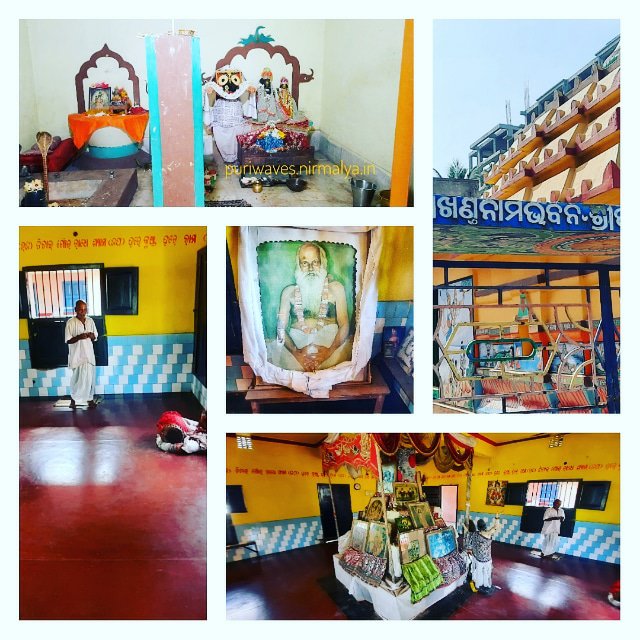

Tucked away inside the Jagannath Vakta Nibash campus, to the left of Sri Gundicha Temple in Puri, stands a little-known but historically rich monastery—Delhi Balakram Das Matha. While Puri is home to numerous mathas (monasteries), this is the only one directly governed by the Sri Jagannath Temple Administration.
Historical Background
Delhi Balakram Das Matha was founded by a saint from Delhi, who was granted 12 acres and 20 decimals of land by the Gajapati king. Over time, however, the land area under its possession has significantly reduced. According to present-day land settlement records, the matha now occupies 3 acres and 10 decimals.
More than 60 years ago, the original dwelling rooms were demolished. Today, only a small Jagannath temple, known as Hari Shankar Mandir, remains intact. The temple houses sacred idols and symbols including:
- Wooden idol of Sri Jagannath (Patitapabana)
- Five or six Salagrama stones
- Shiva Linga
- Goddess Parvati
- Ganesha, Kartikeya, and Hanuman
There is also a large well situated at the back of the monastery.
Daily Rituals and Servitorship
The daily rituals at the matha closely follow traditional practices:
Pahuda (sleeping rituals)}
Mangala Arati (early morning worship)
Anna Bhoga (cooked lunch offering)
Sandhya Arati (evening worship)
Bala Bhoga (dry food offerings)


These rituals were long performed by Dayanidhi Padhi of Kumbharapada. After his death in 2007, his son took over the duties and continues to serve the deities faithfully.
Administrative Control and Renovation
After the last Mahanta, Late Gopinath Das, passed away in 1936 without appointing a successor, the Gajapati King assumed direct control of the matha. Since then, the monastery has remained under the administration of the Sri Jagannath Temple for the last 52 years.
During the Nabakalebara of 2015, the deities of this matha also underwent the sacred renewal process. Simultaneously, the matha underwent renovation, with all costs covered by the Jagannath Temple Administration.
Then and Now
Historically, the monastery was surrounded by a field with 50 coconut trees, a small temple, and two to three living quarters. In 1972, the elephants from Nandankanan used for Chandan Yatra and Ratha Yatra were housed here. However, elephants are no longer used in these rituals today.
Recently, the area has been beautified with the development of the Hari Shankar Flower Garden & Temple, following a decision by the executive committee of the Sri Jagannath Temple. Additionally, a pilgrim lodge has been constructed within the matha premises to accommodate devotees.