
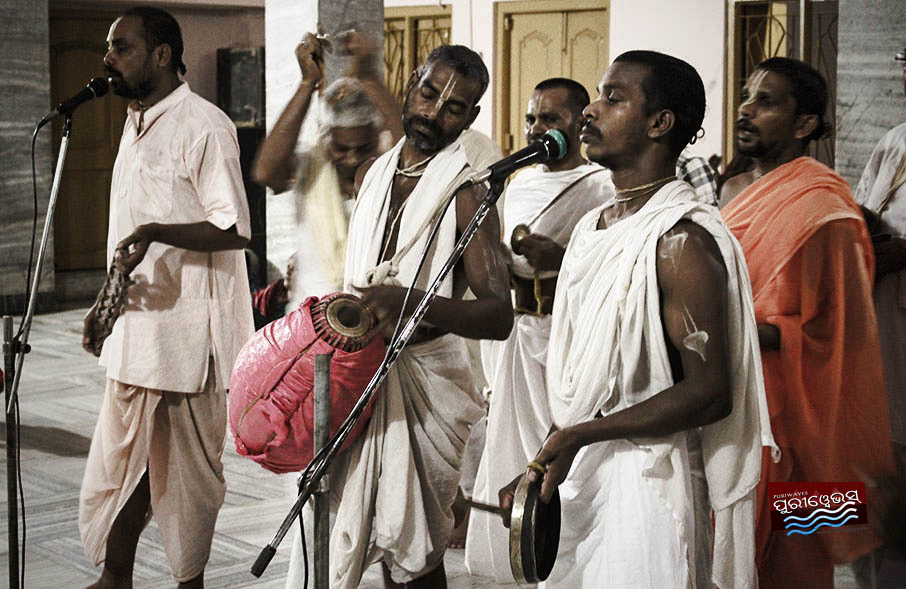
Sankirtan (संकीर्तन) is a sacred practice of collective chanting and singing in praise of the Divine. The word comes from “Sam” (together, complete) and “Kirtana” (glorification, narration), meaning the joyful glorification of God through sound and music in a community spirit.
It is a cornerstone of the Bhakti tradition, emphasizing devotion (bhakti) over ritual or austerity. Through melodious singing, rhythmic instruments, and heartfelt chanting, Sankirtan unites devotees, purifies the mind, and awakens spiritual consciousness.
1. Nama Sankirtan
- Pure chanting of God’s holy names.
- Most common: Hare Krishna Mahamantra (Hare Krishna, Hare Rama).
- Belief: chanting the name itself purifies the mind and heart because the Nama (name) and Nami (the divine being) are considered one.
- Example: Jagannath Nama Sankirtan in Puri during Ratha Yatra.
🔹 2. Leela Sankirtan
- Singing about the divine pastimes (Leelas) of deities like Krishna, Rama, or Jagannath.
- Focuses on stories: Krishna’s Raas Leela, Rama’s exile, Jagannath’s rituals.
- The songs are lyrical, often with dance and enactments.
- Example: Odissi Leela Sankirtan describing Radha–Krishna’s love play.
🔹 3. Bhajan/Kirtan
- Devotional songs with music, instruments (mridanga, harmonium, kartal, manjira).
- Can be solo (Bhajan) or group with call-and-response (Kirtan).
- More emotional and musical compared to Nama Sankirtan.
- Example: evening kirtans in temples or village bhajana mandali.
