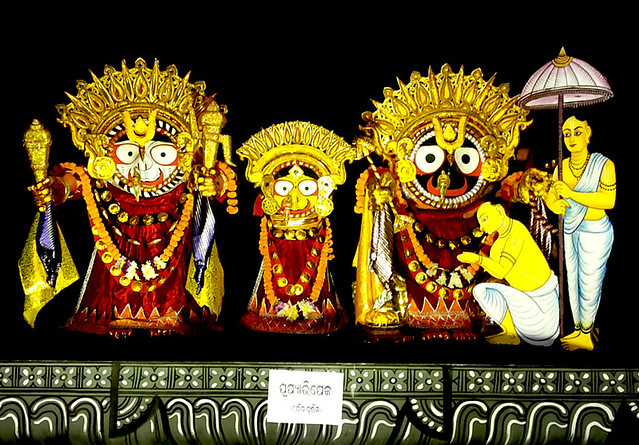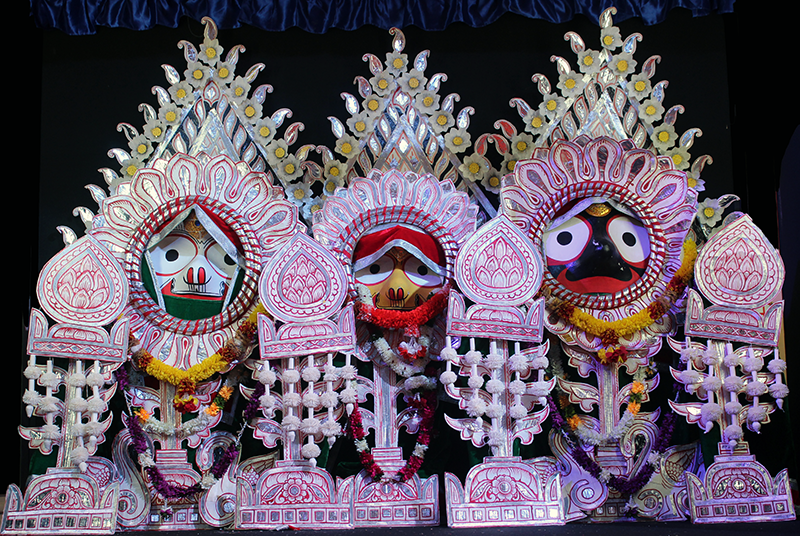
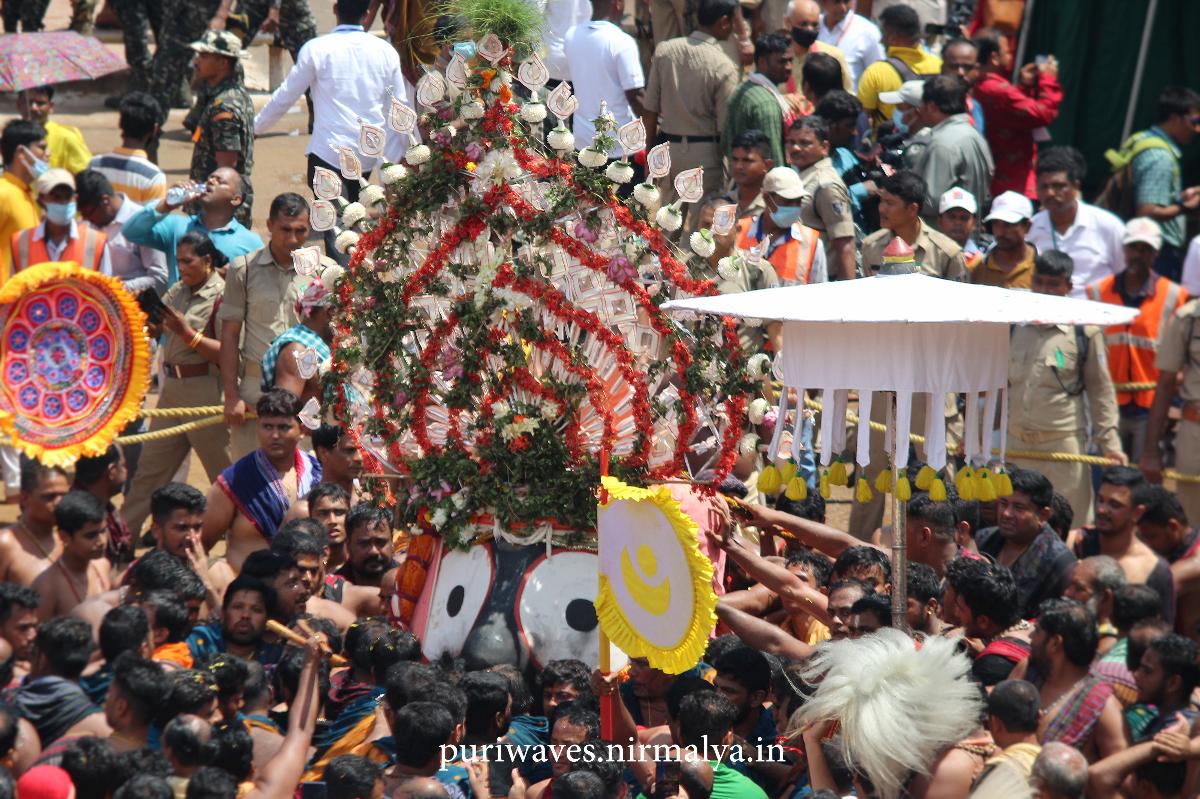
During the grand and sacred Ratha Yatra of Jagannath Temple, one of the most captivating and spiritually significant traditions is the offering of the sacred Tahia to the deities. This magnificent floral head ornament is traditionally prepared and provided by the renowned Raghav Das Math, situated at Bali Sahi in Puri. The math was established by the revered Raghu Arakshita and has preserved this sacred seva for generations.
The Tahia is a beautiful ceremonial crown-like ornament designed especially for the deities during the Rath Yatra festivities. It is crafted with extraordinary devotion using flowers, shola pith, zari work, sacred grass, and thin bamboo strips. The structure of the Tahia spreads outward in a circular form resembling the majestic plume of a peacock, creating a divine and radiant appearance on the heads of the deities. The ornament is not merely decorative but is considered a sacred offering expressing love, devotion, and artistic excellence.
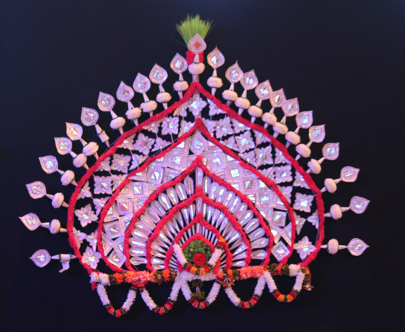
The making of the Tahia requires great skill, patience, and ritual purity. Artisans associated with the seva prepare the framework carefully with bamboo strips and decorate it with floral arrangements and intricate ornamental designs. The use of shola pith gives the Tahia a light yet grand structure, while zari decorations add brilliance and ceremonial beauty. Sacred durba grass and flowers are attached to the sticks in such a way that the entire ornament appears like a divine floral fan.
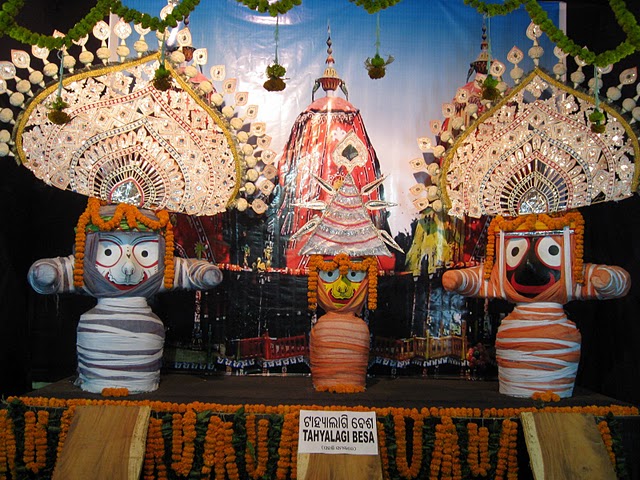
The Tahia prepared for each deity differs in structure and size according to tradition. The Tahia of Jagannath is made with thirty-two sticks, while that of Balabhadra contains thirty-three sticks. The Tahia of Subhadra is comparatively smaller and is prepared with twelve sticks. Traditionally, the Tahia measures about four and a half hands in height and nearly six hands in width, making it one of the most visually striking ritual ornaments associated with the festival.
The sacred moment of Tahia Lagi takes place during the famous Dhadi Pahandi procession of the deities. As the Lords descend majestically from the Ratna Singhasana of the temple and proceed toward the chariots amidst the sounds of cymbals, conches, chanting, and devotional music, thousands of devotees gather to witness the divine spectacle. When the deities reach the Satapahacha — the sacred seven steps of the temple — the Daitapati servitors ceremonially place the Tahia upon the heads of the deities one after another. This moment is considered highly auspicious and spiritually uplifting.
The Tahia tradition is observed not only during the main Rath Yatra but also during the Bahuda YatrBahuda Jatra, the return journey of the deities from the Gundicha Temple back to the Jagannath Temple. During Bahuda, the Tahia is again ceremonially offered to the deities near the Jagamohana gate of the Gundicha Temple before the return procession begins.
Thus, the Tahia tradition represents a unique blend of devotion, ritual heritage, temple artistry, and cultural identity. It remains one of the most cherished and visually magnificent traditions associated with the sacred Rath Yatra of Puri, reflecting the timeless devotional culture surrounding Lord Jagannath and His divine siblings.