
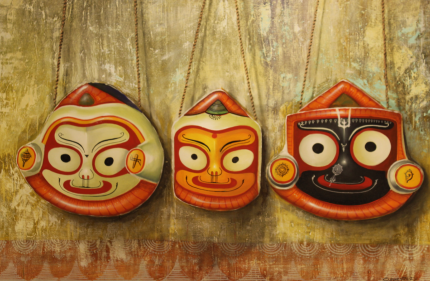
Among the many sacred rituals of Jagannath Temple, the Banaka Lagi Niti holds a special place in the devotional and artistic traditions of the temple. This unique ritual is associated with the beautification and divine decoration of the holy faces of the deities — Jagannath, Balabhadra, and Subhadra. The ritual reflects the refined temple culture of Puri, where devotion, art, fragrance, color, and symbolism blend into a sacred offering to the Lords.
The word Banaka refers to decorative coloring, painting, or ornamentation applied to the divine faces of the deities. Banaka Lagi literally means the ceremonial application of these sacred colors and artistic decorations. This ritual is generally observed once a week, usually on Wednesdays or Thursdays, after the Dwiprahara Dhupa, the midday offering of food to the deities. On certain special occasions and rituals, Banaka Lagi is also performed according to temple traditions.
Inside the temple, the preparation for this sacred ritual takes place in the Sara Ghara, where the ingredients are carefully mixed in accordance with ancient customs. The Banaka paste is traditionally stored in a silver vessel before being used for the ritual. The preparation itself is considered sacred and is made using a combination of natural and aromatic substances that have both ritualistic and aesthetic significance.
The Banaka mixture is prepared from ingredients such as Hingula (a red mineral pigment), Haritala (yellow pigment), powdered conch shell, saffron, camphor, wood-apple gum, kasturi, kajal, and oil. Each ingredient contributes to the texture, fragrance, and color of the sacred paste. The natural pigments give brilliance to the divine faces, while aromatic substances like saffron and camphor add purity and spiritual fragrance to the ritual.
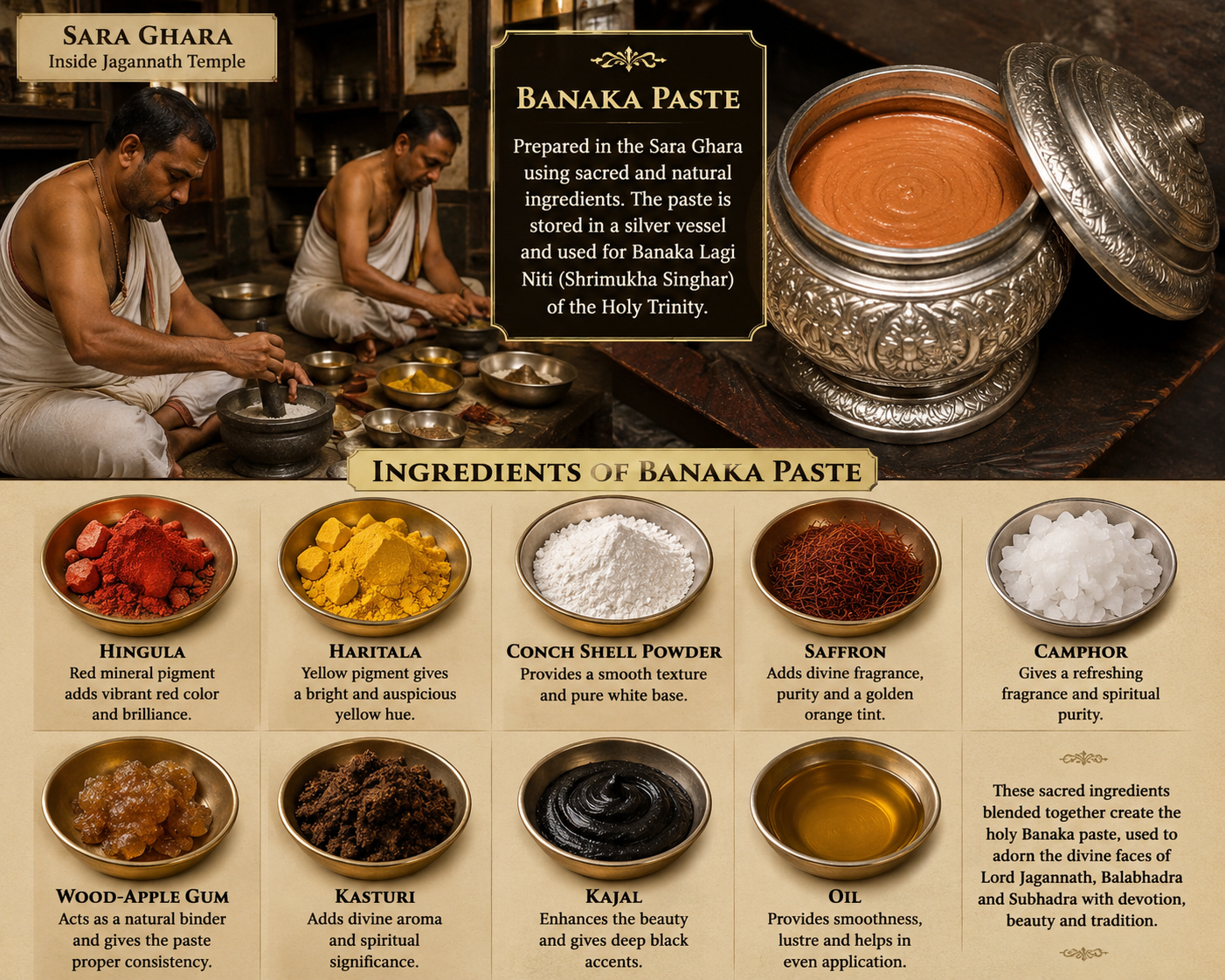
The responsibility of performing this ritual belongs primarily to the Datta Mahapatra servitors, who are specially trained in the traditional temple arts and rituals. They carefully decorate the divine faces of the deities with precision and devotion. The outer decorative work is performed by the Chitrakara servitors, while the inner sacred adornment is completed by the Shrimukha Singharī servitors. The entire process is carried out with deep reverence, maintaining centuries-old temple traditions.
The Banaka Lagi ritual is also popularly known as Shrimukha Singhar, meaning the adornment of the holy face. During this ritual, the divine expressions of the deities become even more radiant and captivating. Devotees believe that the Lords appear in a particularly graceful and charming form after Banaka Lagi. The ritual highlights the intimate relationship between the devotees and the deities, where the Lords are lovingly cared for and decorated like living divine beings.
One of the most significant aspects of Banaka Lagi is its connection with the artistic heritage of Puri. The ritual reflects the traditional painting culture associated with Jagannath worship and demonstrates how sacred art forms have been preserved through temple rituals for centuries. The colors and patterns used during Banaka Lagi are not merely decorative but are symbolic expressions of devotion and spiritual beauty.
During the sacred Nabakalebara ceremony, when the wooden forms of the deities are ceremonially renewed, Banaka Lagi also forms an important part of the rituals connected with the adornment of the newly manifested divine forms. This further emphasizes the importance of the ritual within the broader traditions of Jagannath culture.
Thus, Banaka Lagi Niti is not only a ritual of decoration but also an expression of devotion, sacred artistry, and living tradition. It represents the eternal beauty of Lord Jagannath and the rich ritual heritage of the holy city of Puri.

