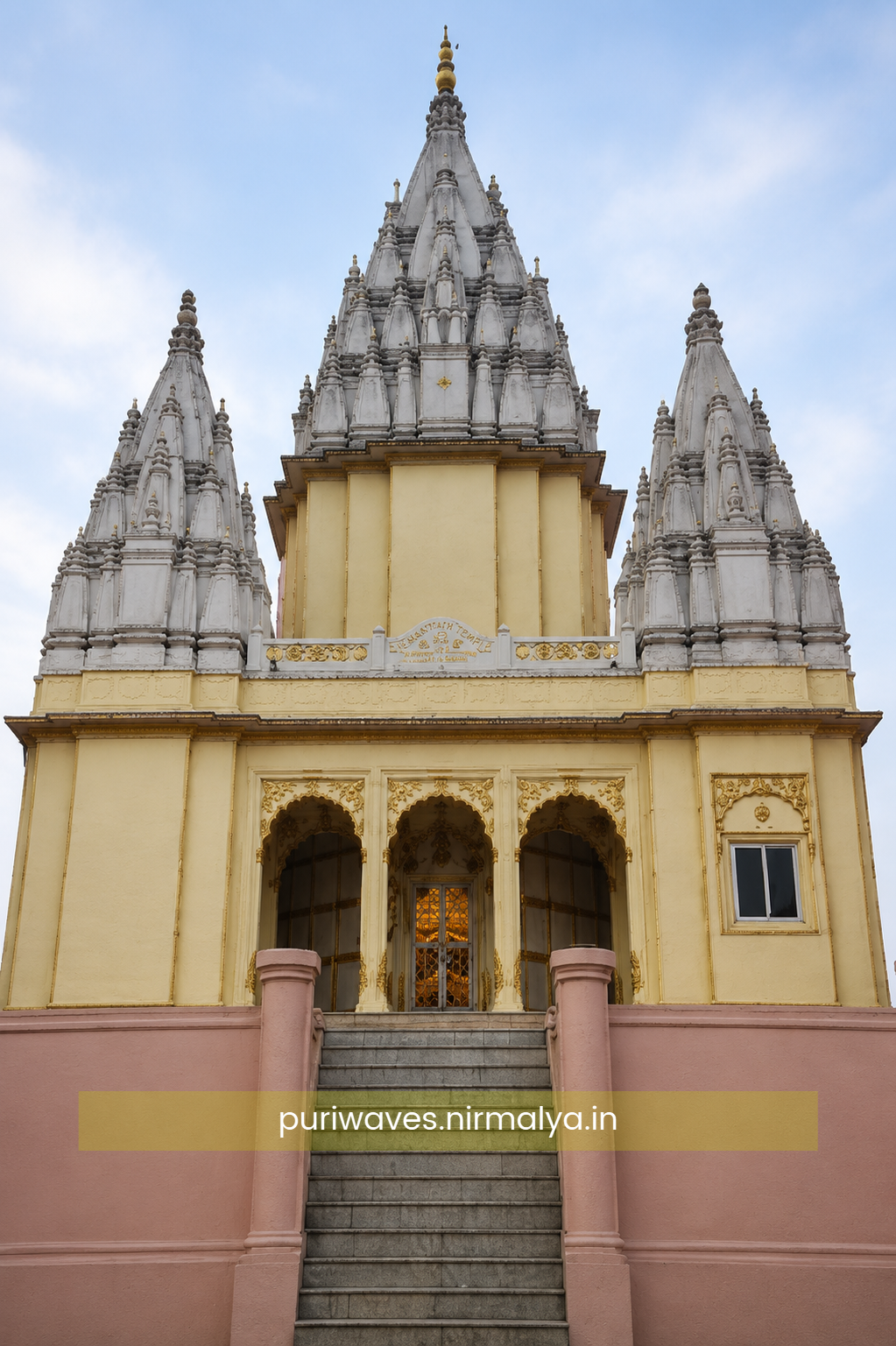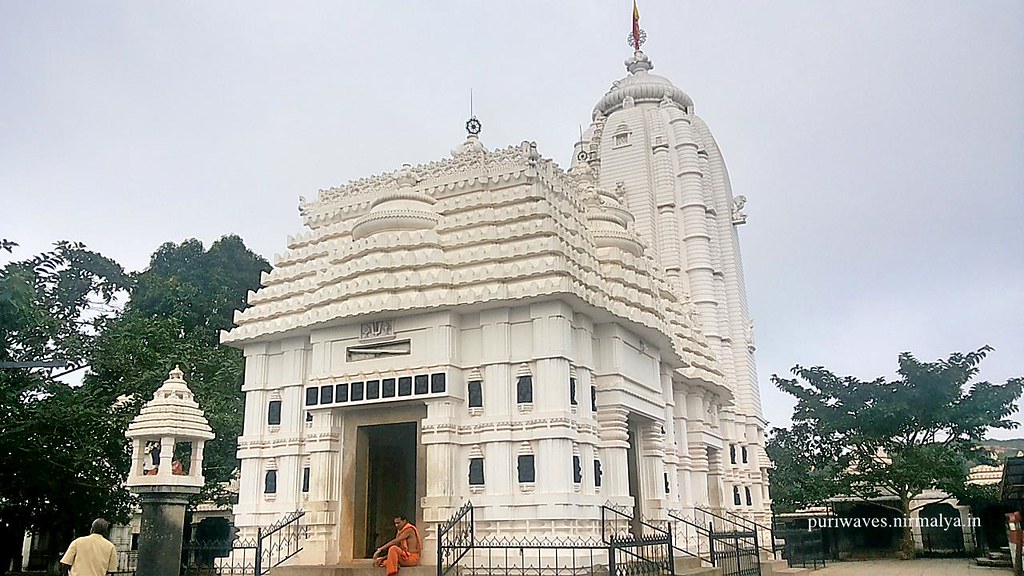
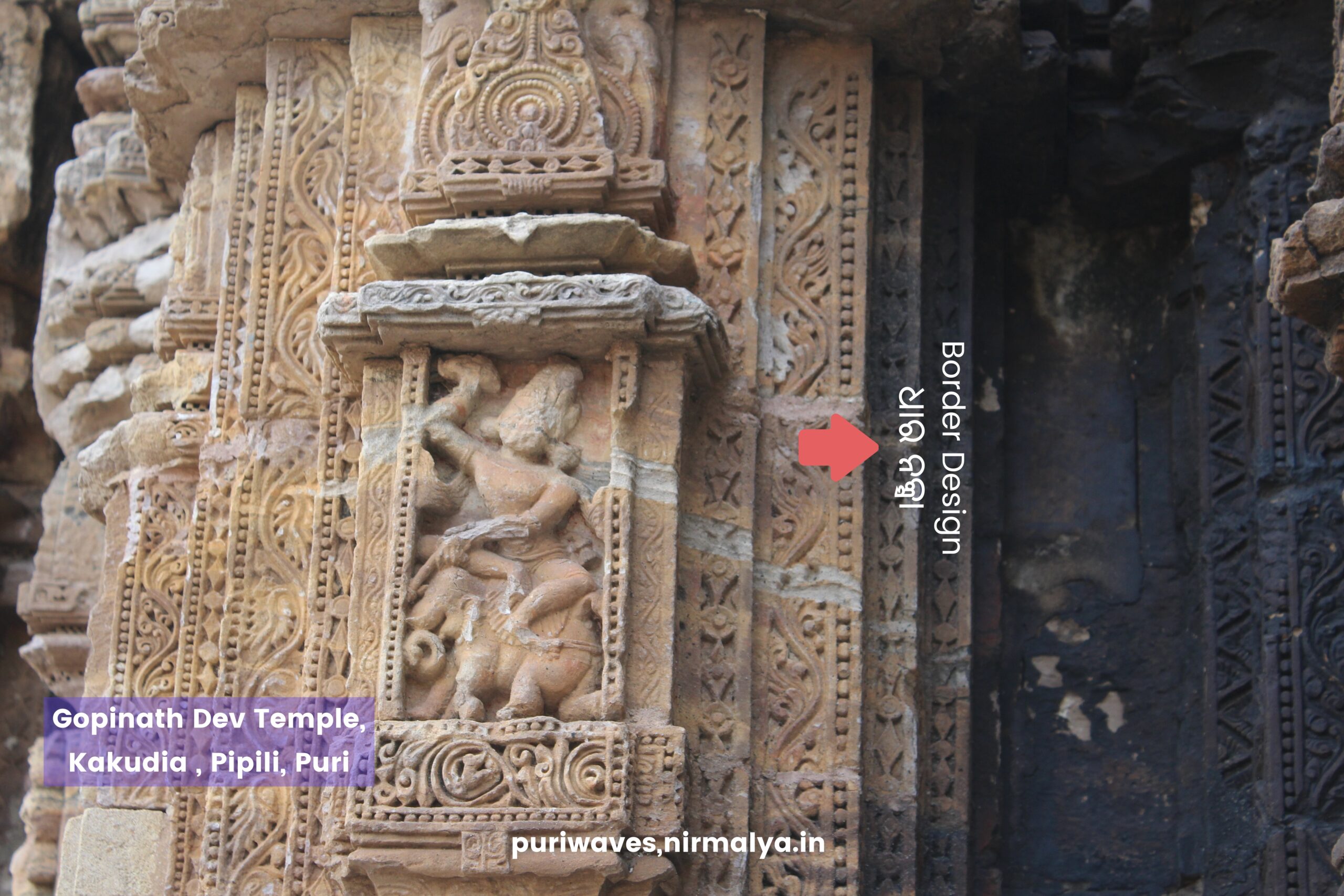
The 13th-century Gopinath Dev Temple preserves a rich variety of ornamental carvings and traditional decorative patterns in its temple architecture. Among these are different forms of border designs and motifs skillfully carved on stone surfaces, reflecting the artistic excellence of medieval Odisha temple art. These designs not only beautify the structure but also express the cultural and aesthetic traditions of the period.
A single motif (ଏକକ ନକ୍ସା) is an independent decorative pattern consisting of one flower, a vine segment, a fruit, or a design enclosed within shapes such as a circle, square, or triangle. In some cases, it may also include a single animal or a pair of animals. Such motifs remain complete and self-contained in themselves, maintaining a fixed and balanced composition without requiring extension.
A border design (ଧାର ନକ୍ସା) is created by arranging one or several single motifs continuously in a line or decorative strip. It may also appear as flowing creepers decorated with leaves, flowers, and related ornamental forms that can be extended according to need. Unlike the static nature of a single motif, a border design creates a sense of movement, rhythm, and continuity, and may be either decorative or geometric in style.