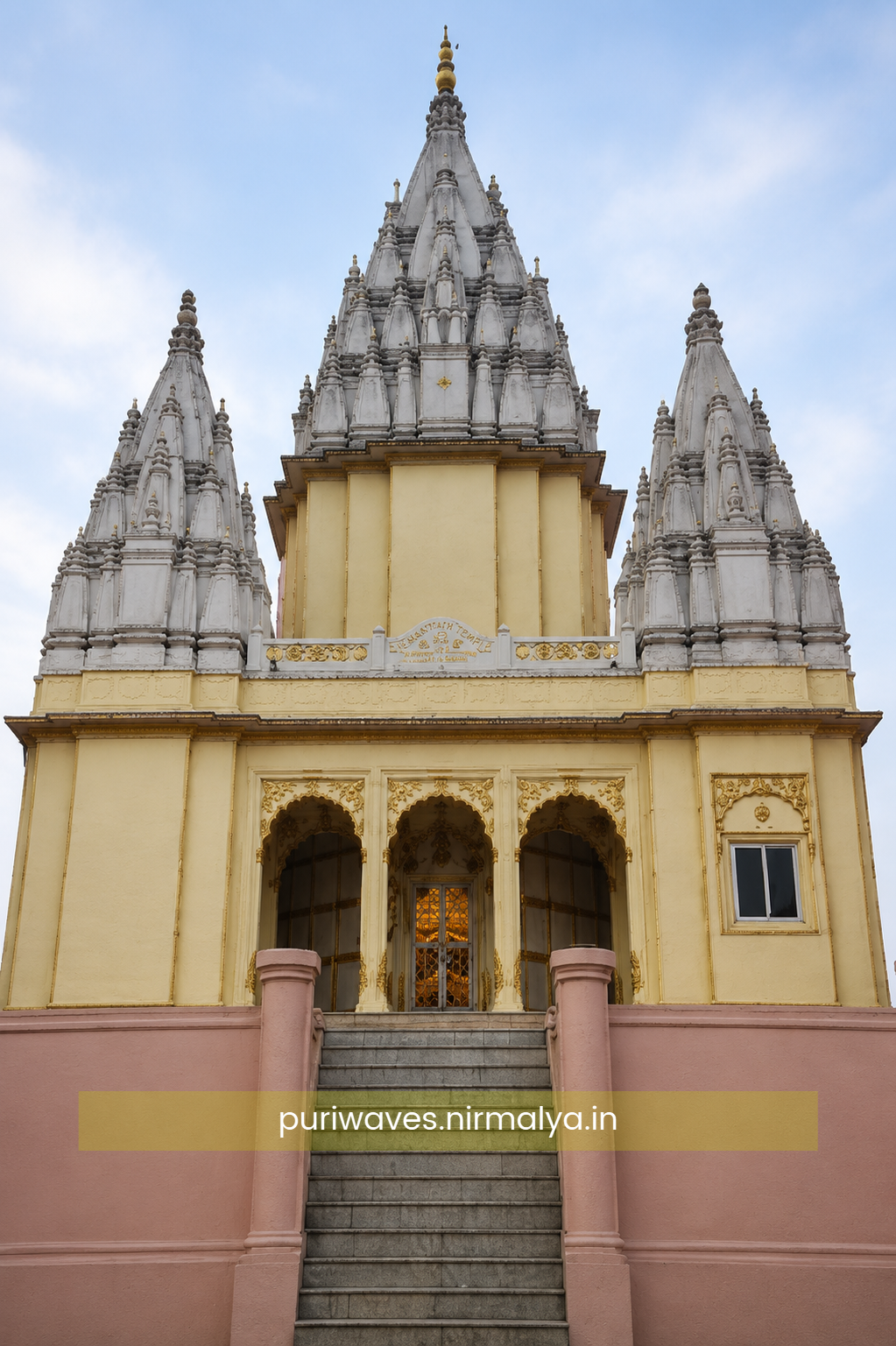
Standing gracefully on the historic Grand Road (Bada Danda) of Puri, opposite the sacred Jagannath Temple, the Hemantanatha Temple, popularly known as the Patiarani Temple, is a remarkable yet lesser-known heritage shrine of Sri Kshetra.
History
According to local tradition, Maharani Hemanta Kumari Devi, associated with the former Patiya/Puthia royal estate of Bengal (present-day Bangladesh), visited Puri in 1888. Deeply inspired by the grandeur of Lord Jagannath and the spiritual atmosphere of Sri Kshetra, she resolved to establish a temple dedicated to her beloved deities. The present temple was subsequently constructed between 1912 and 1918 CE, as recorded on its foundation stone.

The temple came to be known as Patiarani Temple because of its association with the royal queen (Rani), while its formal name is Hemantanatha Temple, preserving the memory of its founder.
Presiding Deities
The temple enshrines Sri Sri Radha Krushna. Krishna, carved from black chlorite stone, stands in the graceful tribhanga posture holding a flute, while Sri Radha stands beside Him. The temple follows the Gaudiya Vaishnava tradition and remains an active center of devotion.
Festivals
Major festivals celebrated here include:
- Janmashtami
- Dol Purnima (Holi)
- Ashtaprahari Nama Sankirtana
- Various Radha-Krushna devotional observances throughout the year
Architecture
Built in the Gaudiya style, the temple combines elegant Odishan temple spires with beautifully ornamented arches, pillars, and decorative floral motifs. Despite being surrounded by the bustling commercial heart of Puri, the shrine preserves a serene spiritual atmosphere.

More than a century after its construction, Hemantanatha (Patiarani) Temple continues to stand as a symbol of royal devotion, preserving the legacy of Maharani Hemanta Kumari Devi and the eternal worship of Radha and Krushna in the sacred land of Lord Jagannath.