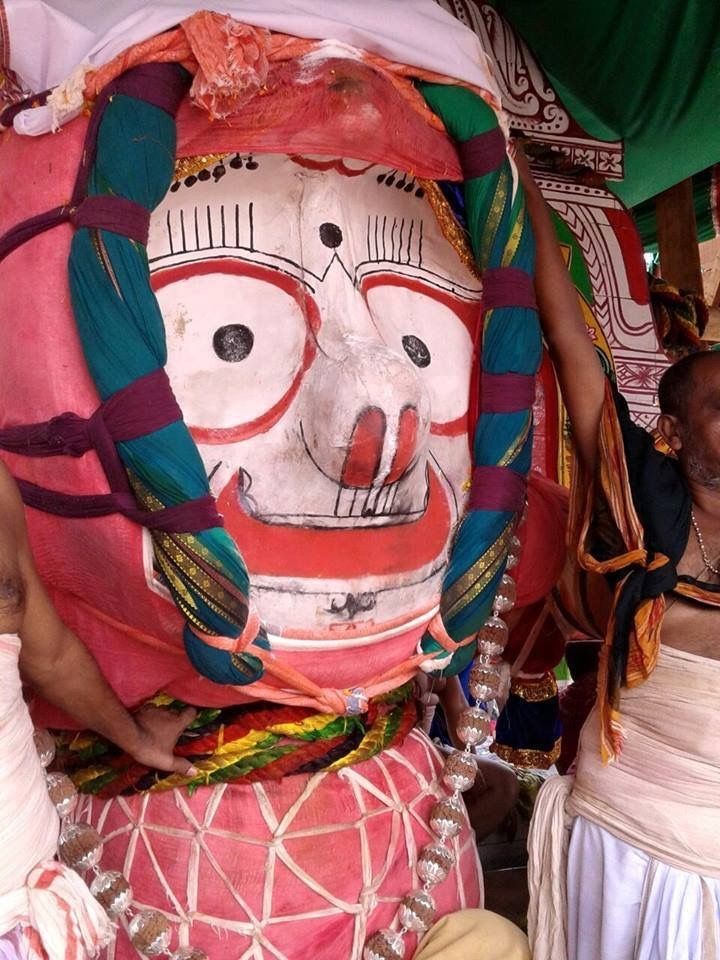
The Dwarapalas of Devi are divine guardians who protect the sanctum of the Goddess, symbolizing spiritual thresholds. They challenge devotees to overcome illusion, fear, and ignorance before attaining Devi’s grace.
The concept of Dwarapalas (gatekeepers) is deeply embedded in Hindu temple traditions, especially in the worship of the Divine Mother, Devi. These guardian deities are not mere sentinels but symbolic representations of cosmic forces that stand between the seeker and the ultimate truth of the Goddess. Each Dwarapala embodies specific qualities—protection, wisdom, illusion, and ferocity—challenging the devotee to overcome spiritual hurdles before attaining the Goddess’s grace.
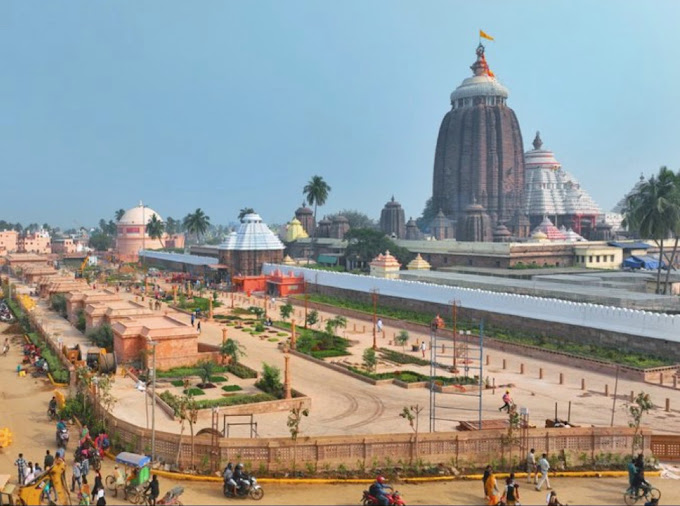
Puri is one of the sacred Shakti Pithas, where Goddess Bimala (Vimala) is worshipped as the divine consort of Lord Jagannath. It is believed that Sati’s navel fell here, making it a significant center of Tantric and Shakta worship. The Dwarapalas of Devi Bimala, like other Shakti Pithas, serve as divine sentinels, guarding the sanctum and symbolizing the spiritual tests a devotee must pass before attaining her blessings.
In temples, Dwarapalas are often depicted in fierce forms, standing with weapons, adorned with divine ornaments, and exuding a commanding presence. They are stationed at the entrance or inner sanctum, ensuring that only the worthy can access the deeper mysteries of the deity. Some Dwarapalas are independent deities in their own right, while others manifest as aspects of the Goddess herself.
Chaya and Maya: The Twin Veils of Reality
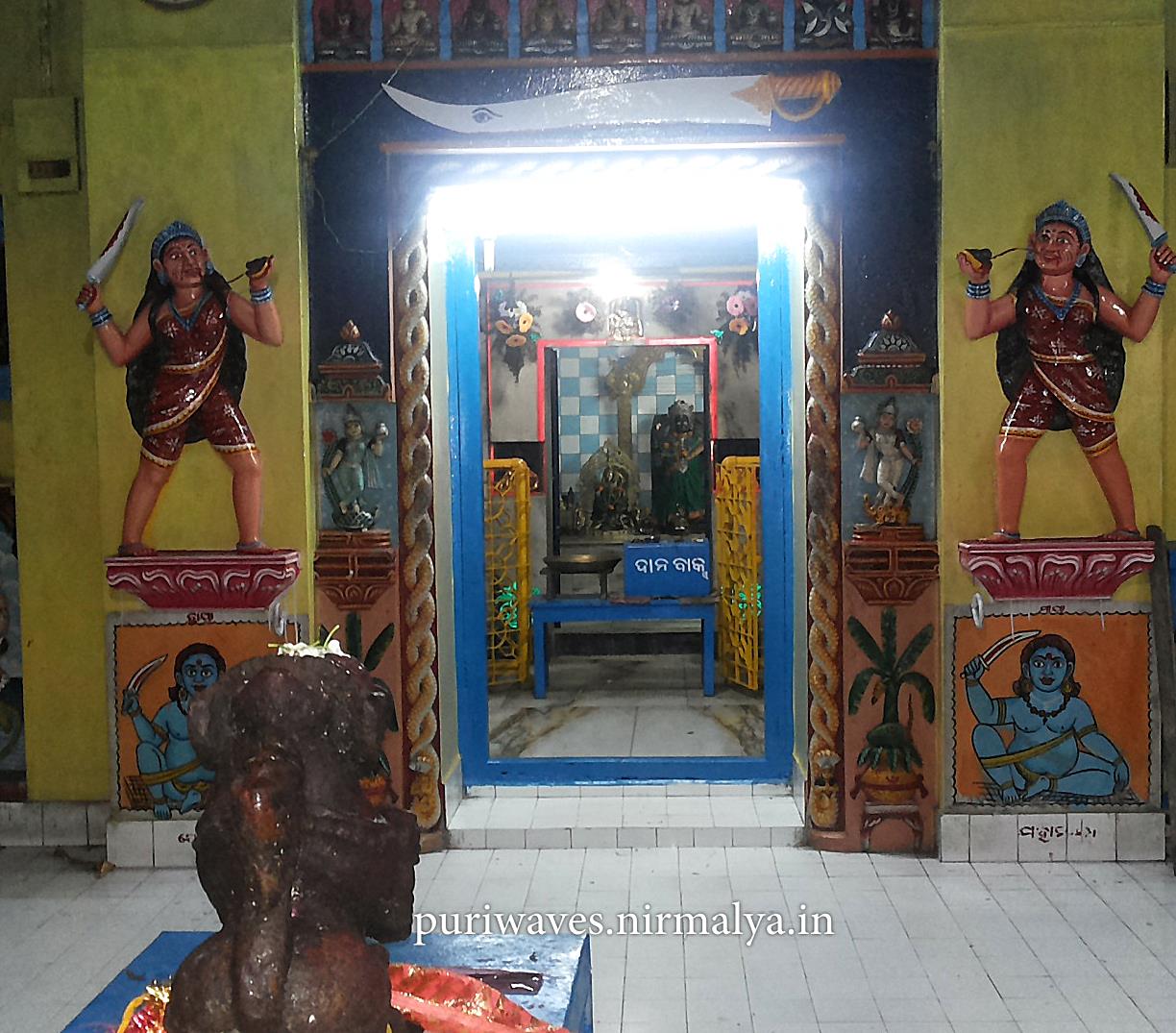
Among the most enigmatic guardians of Devi are Chaya and Maya. Their names themselves reveal their essence—Chaya (shadow) represents the illusory nature of existence, the fleeting reality that changes with light and perception, while Maya (illusion) is the cosmic force that binds beings to Samsara, the cycle of birth and death. These two Dwarapalas symbolize the first threshold a seeker must cross: distinguishing between what is real and what is merely a mirage of the senses.
Dwarapala
Chaya and Maya are often depicted as shadowy figures, ever-shifting, their forms indistinct, reminding the devotee that perception itself is a limitation. The path to Devi requires piercing through these veils of illusion, which is why in spiritual practices, aspirants are advised to meditate on the dissolution of the ego and the realization of the ultimate truth beyond worldly illusions.
Sihinka and Bhaluka: The Fearsome Protectors
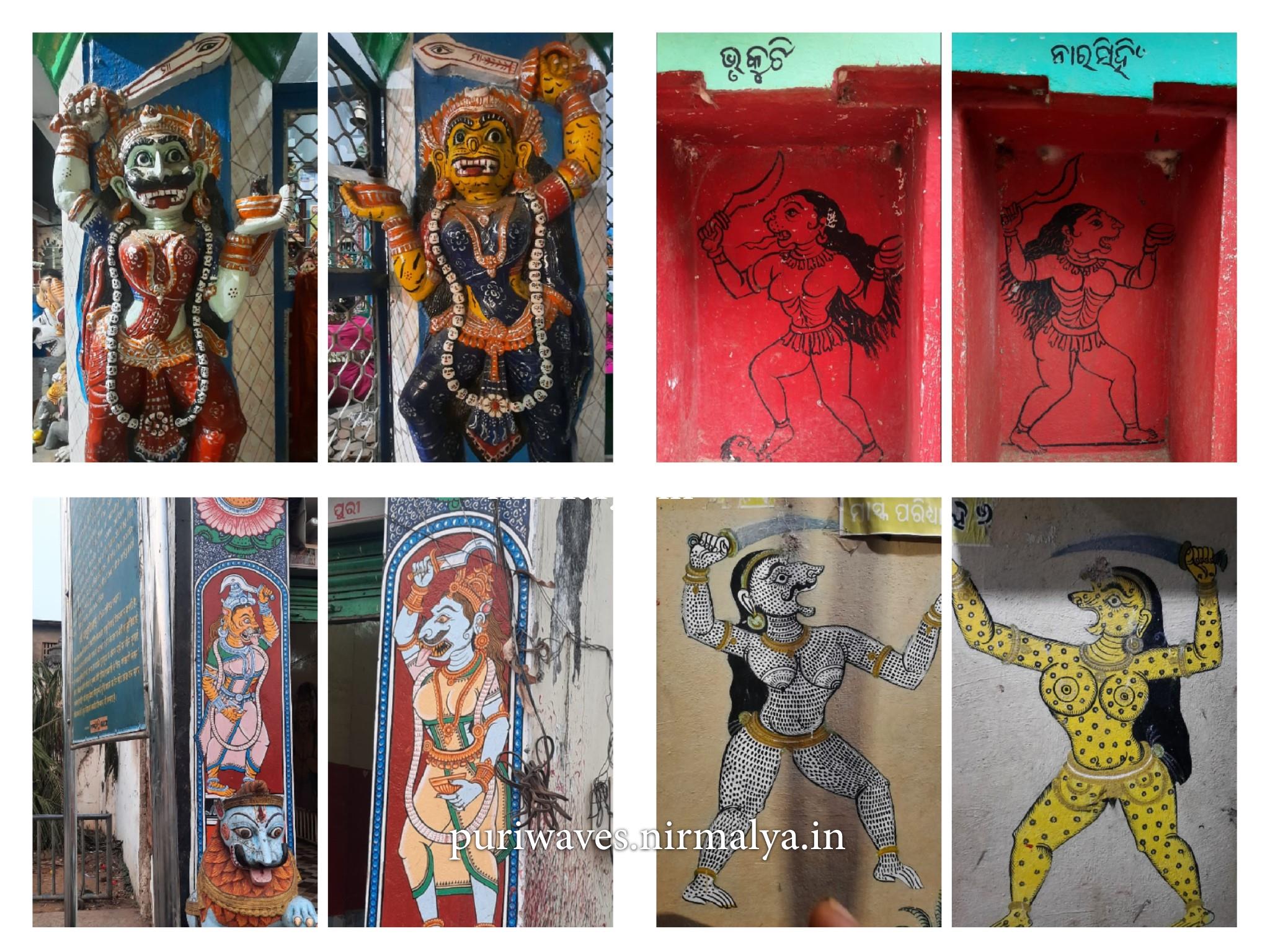
Sihinka and Bhaluka are two other powerful Dwarapalas guarding the divine threshold. Sihinka is often associated with darkness and the devouring of illusions. In some traditions, she is linked to the mythological Simhika, a demoness from Hindu scriptures who could swallow entire celestial bodies, symbolizing the force that consumes the unreal to reveal the eternal. She stands at the gates of the Goddess’s abode, her presence signifying the necessity to confront one’s inner darkness before stepping into divine light.
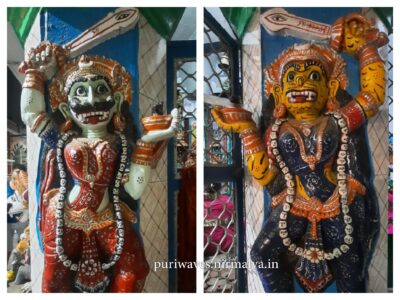
Dwarapala
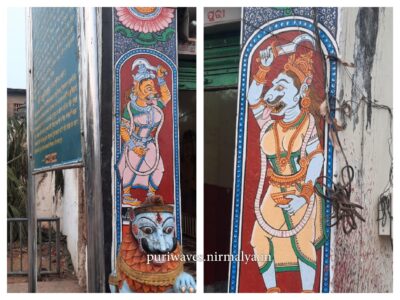
Dwarapala
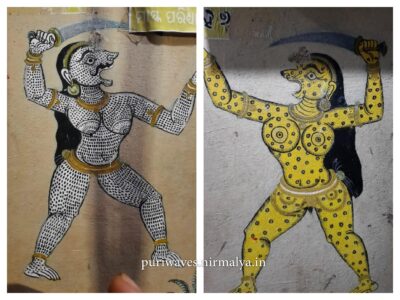
Dwarapala
Bhaluka, on the other hand, is depicted as a bear-faced warrior, embodying strength, endurance, and unwavering devotion. He represents the perseverance needed in the spiritual path, where one must endure trials and hardships with unshakable faith. The symbolism of Bhaluka aligns with the teachings of Shakta traditions, where devotion to Devi requires the seeker to exhibit unwavering resolve, much like a bear’s tenacity in the wild.
Bhrukuti: The Frown of Divine Wrath
One of the most awe-inspiring Dwarapalas of Devi is Bhrukuti, whose very name means “frown” or “furrowed brow.” She is a fierce emanation of the Goddess, born from Devi’s knitted brows during moments of divine rage. In iconography, Bhrukuti is shown with her forehead creased in fury, her eyes blazing with righteous indignation. She embodies the wrath of the Goddess against injustice, ignorance, and oppression.
Bhrukuti is revered in both Shakta and Vajrayana Buddhist traditions. She is sometimes depicted with multiple arms, wielding weapons that signify her power to destroy delusion and eradicate obstacles. Worshiping Bhrukuti is believed to grant clarity, strength, and the ability to overcome life’s challenges. Devotees seeking divine intervention against adversities often invoke her fierce presence, as she clears the path for true seekers while standing as an insurmountable barrier for the unworthy.
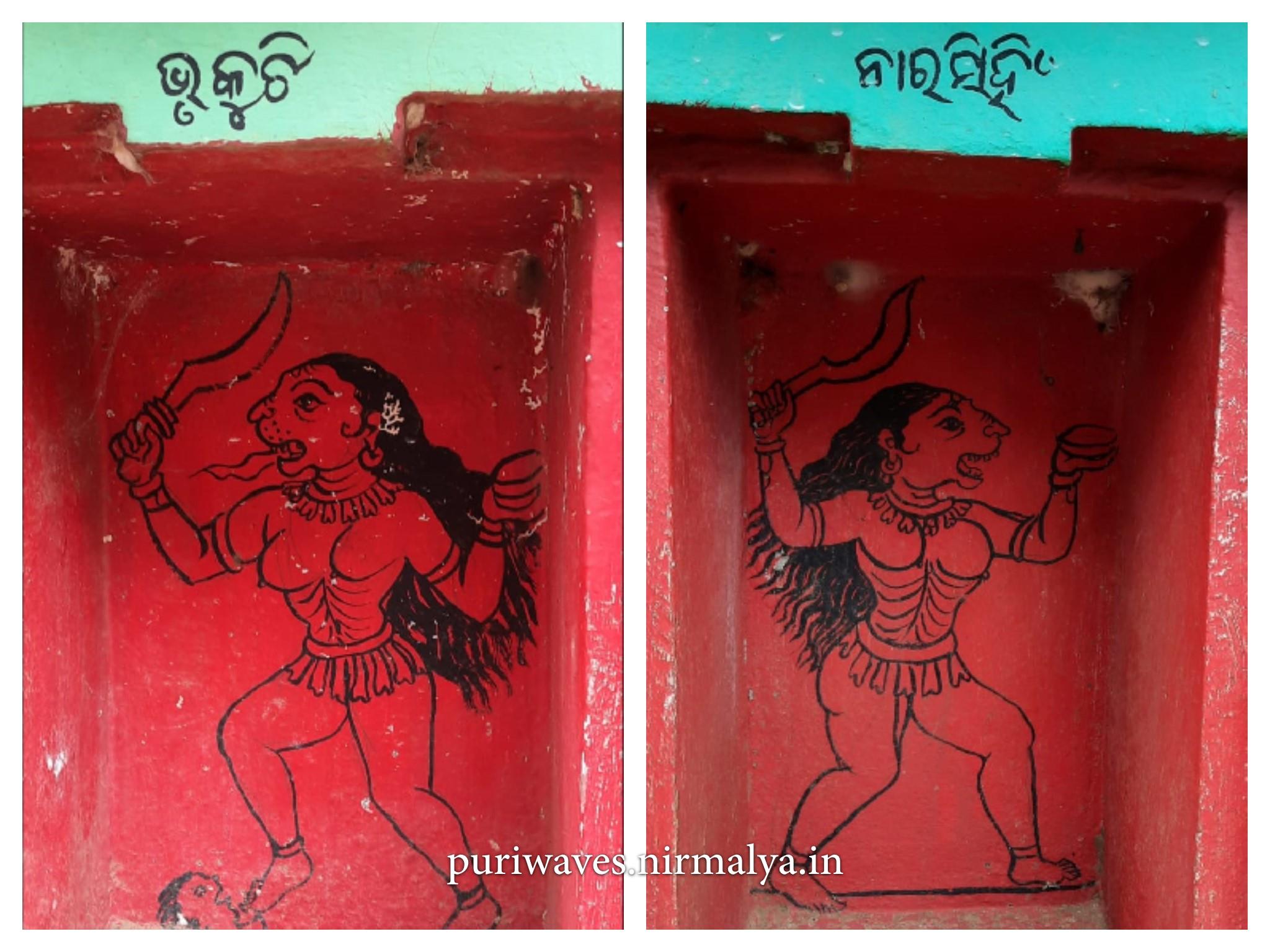
Narasinghi: The Lion-Headed Guardian
Another formidable Dwarapala of Devi is Narasinghi, the lion-headed manifestation of the Goddess. She is often associated with Pratyangira Devi, the ferocious lion-faced deity who balances Narasimha’s destructive energy. Narasinghi stands as a protector of the Goddess’s domain, embodying raw power, divine fury, and the annihilation of evil.
Her iconography closely resembles that of Narasimha, but with distinct feminine aspects—her mane flowing like a celestial river, her eyes radiating unyielding intensity. In tantric traditions, Narasinghi is invoked in rituals meant to neutralize negative forces, counteract black magic, and grant invincibility. Those who seek her blessings must be prepared to face her tests, for she represents the power that shatters illusions and falsehoods, leading only the fearless to the Goddess’s sanctum.
Jogamaya and Mahamaya: The Cosmic Forces
Beyond the physical guardians, Devi’s realm is also protected by Jogamaya and Mahamaya, two supreme forces that govern the universe. Jogamaya is the Goddess’s divine power of illusion, responsible for orchestrating the grand cosmic play (Lila). She is the force behind divine incarnations, veiling the true nature of reality so that cosmic events unfold according to divine will. She is not merely a Dwarapala but an active cosmic principle, ensuring that the divine plan unfolds as destined.
Mahamaya, on the other hand, is the great cosmic illusion that binds beings to the material world. While she is the reason for worldly attachments, she is also the one who grants liberation when a devotee fully surrenders to the Goddess. Worshiping Mahamaya allows one to transcend the duality of existence and realize the supreme truth beyond form and illusion.
The Worship and Symbolism of Devi’s Dwarapalas
The Dwarapalas of Devi are not merely mythological figures but deeply embedded aspects of spiritual progression. In many temples, these guardians are placed at the entrance to symbolize the threshold between the mundane and the divine. To approach the Goddess, a devotee must be prepared to:
- Distinguish between illusion and reality (Chaya & Maya)
- Conquer inner darkness and develop perseverance (Sihinka & Bhaluka)
- Face divine judgment and purify the mind (Bhrukuti & Narasinghi)
- Transcend cosmic illusions and surrender to the divine will (Jogamaya & Mahamaya)
Temples dedicated to Devi often feature these figures in sculptural forms, reminding devotees of the trials they must undergo. In tantric rituals, practitioners invoke these guardians as gatekeepers of wisdom, asking for their permission and blessings before deeper spiritual practices.
The Dwarapalas of Devi are more than just protectors of temple entrances—they are the personifications of spiritual thresholds that every seeker must cross. Their fierce, enigmatic, and powerful forms are reminders that devotion is not a mere ritual but a transformative journey. Whether it is the shadows of Chaya and Maya, the endurance of Bhaluka, the wrath of Bhrukuti, or the cosmic powers of Mahamaya, each guardian challenges the devotee to prove their worthiness before standing in the presence of the Supreme Goddess.
True seekers who face their fears, conquer illusions, and embrace divine wisdom will find that these guardians are not barriers but guides—leading them toward the ultimate realization of Devi’s boundless grace and power.